
58% lower
Critical transaction incidents
Case Studies B2B fintech operations platform
A fintech product handling higher transaction volume needed stronger reliability boundaries, clearer failure behavior, and a technical roadmap before operational risk increased.
Digital Product Agency
B2B fintech operations platform
Critical transaction incidents
58% lower
Company context
B2B fintech operations platform
Focus
Zyvor reviewed transaction paths, integration dependencies, recovery beh…
Business pressure
For a B2B fintech platform, architecture weaknesses quickly become comme…
Outcome
58% lower
Case overview
Situation
The platform was processing more operationally sensitive workflows while the business prepared for larger usage commitments. Reliability issues were not constant, but the risk profile was changing as transaction volume and partner dependencies increased.
Business context
For a B2B fintech platform, architecture weaknesses quickly become commercial and trust problems. The business needed a practical reliability roadmap that respected roadmap pressure while reducing the chance of high-impact operational surprises.
Why the previous approach failed
The existing approach focused on fixing visible issues as they appeared. That was no longer enough because risk was distributed across transaction boundaries, third-party integrations, recovery behavior, and unclear ownership around failure handling.
Critical transaction incidents
Partner integration retries
Incident review completion
The business moved from reactive reliability work to a clearer software architecture roadmap for transaction…
Challenges
Transaction-heavy workflows had several hidden dependency points that were difficult to reason about under load.
Failure behavior was inconsistent across important customer and partner paths.
Leadership needed a reliability sequence that could be explained commercially and executed technically.
Approach
Mapped critical transaction paths, dependency ownership, retry behavior, failure surfaces, and support escalation loops.
Prioritized reliability improvements by customer impact, operational exposure, engineering effort, and business timing.
Defined technical leadership guardrails for release quality, observability, and incident learning across sensitive workflows.
Impact
The business moved from reactive reliability work to a clearer software architecture roadmap for transaction confidence, operational resilience, and higher-volume customer growth.
Zyvor reviewed transaction paths, integration dependencies, recovery behavior, and engineering ownership so leadership could sequence reliability work against commercial growth.
Critical transaction incidents
58% lower
Partner integration retries
37% reduced
Incident review completion
100% coverage
Who this is relevant for
Fintech and operations platforms where transaction behavior is becoming harder to reason about
Teams facing growth where reliability risk could affect commercial trust
Founders and technical leaders who need a practical sequence before deeper platform investment
These are the pressure signals that usually mean this kind of architecture and observability work should come before more product expansion.
Signal 1
When transaction volume is increasing but reliability decisions are still handled mainly as incident follow-up
Signal 2
When partner integrations and customer workflows need more predictable failure behavior
Signal 3
When leadership needs reliability work framed in business risk terms, not only engineering backlog terms
Continue into the service path that matches this case pressure.
View detailContinue into the service path that matches this case pressure.
View detailContinue into the service path that matches this case pressure.
View detailContinue into the service path that matches this case pressure.
View detailNearby delivery proof for buyers comparing similar product and architecture pressure.
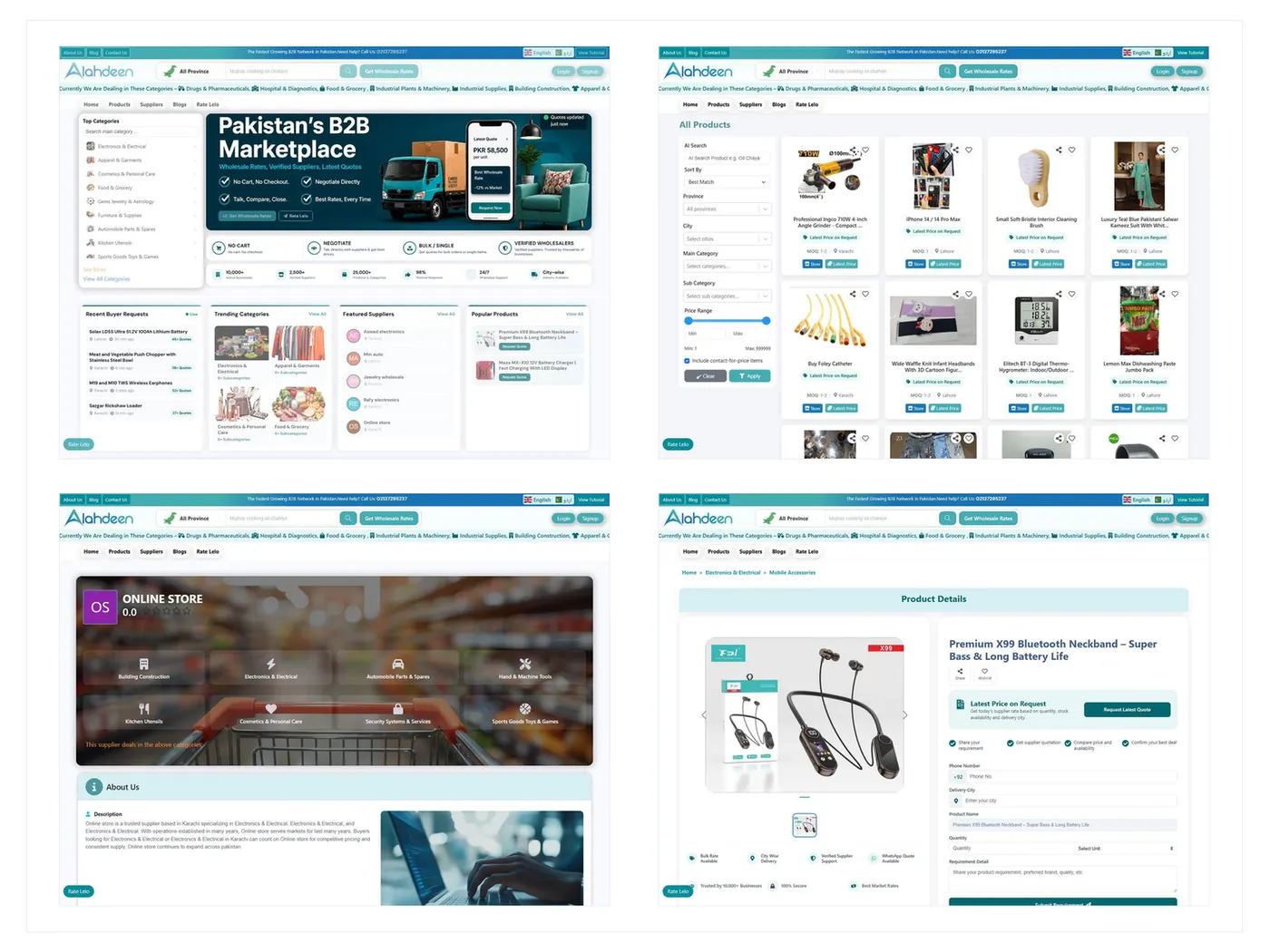
B2B Marketplace
A multi-vendor B2B marketplace connecting wholesale buyers, suppliers, catalogs, storefronts, leads, quotations, and seller operations.
View detail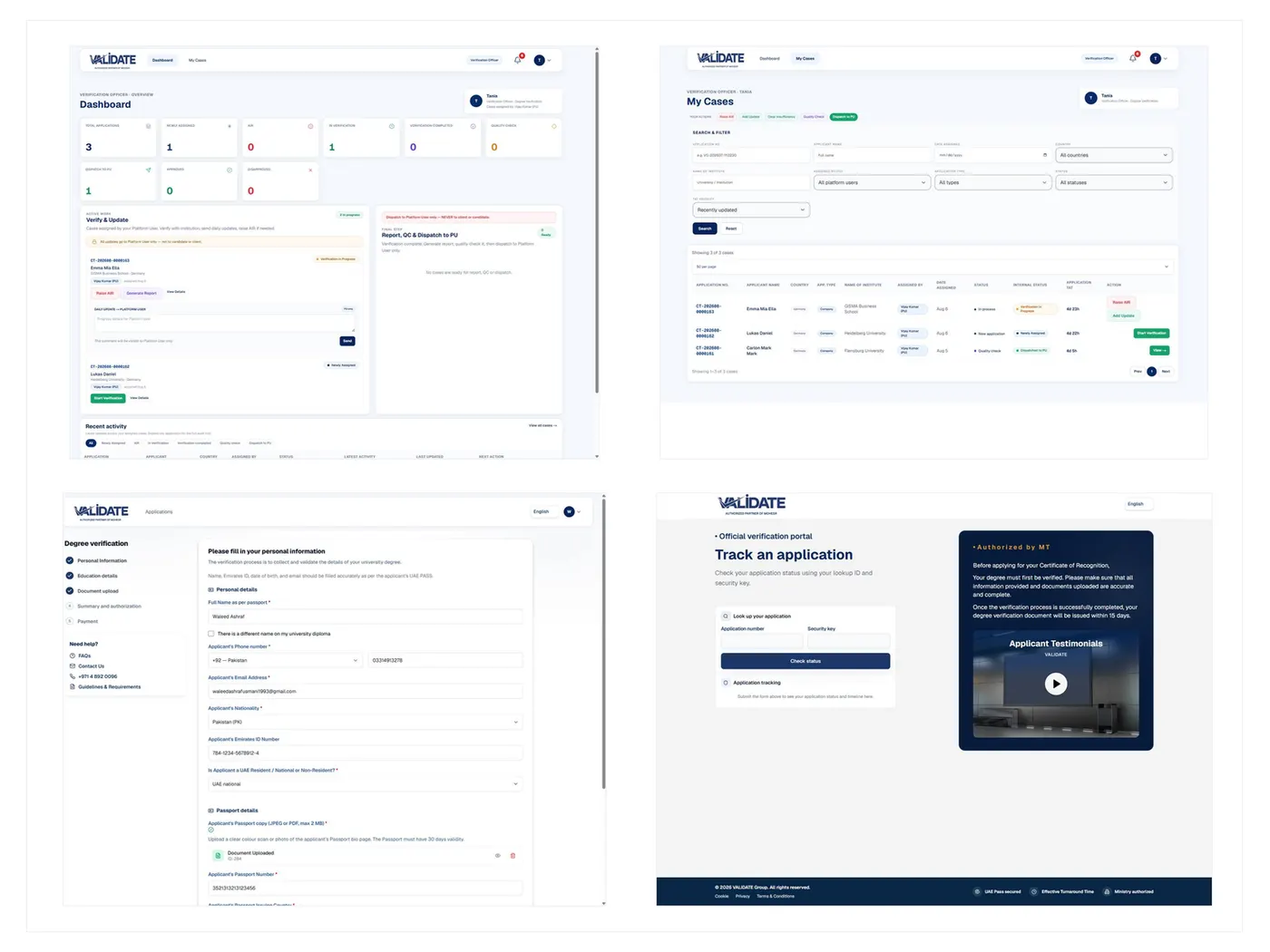
Verification / RegTech
A five-portal verification operations system for applicants, company administrators, processing teams, verification officers, and super administrators.
View detail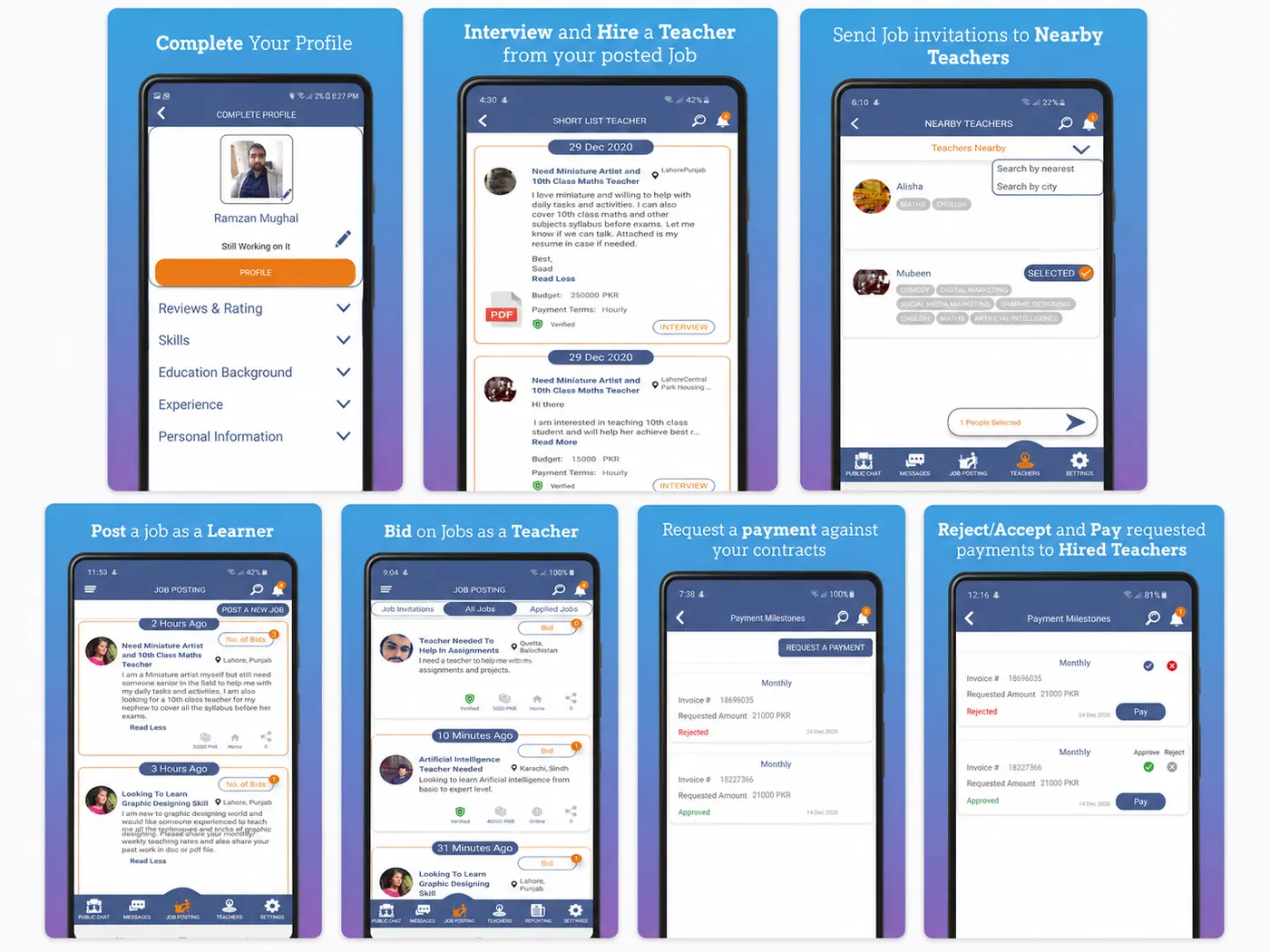
EdTech Marketplace
A two-sided learning marketplace mobile app connecting students and teachers through jobs, bids, profiles, chat, interviews, engagement decisions, and payment requests.
View detailExplore more
This case study turns B2B fintech operations platform into a fuller buyer journey: the software problem, the product pressure, the architecture support behind execution, and the next step for US and UK businesses facing similar growth pressure.
Digital Product Agency model: Strategy, Design, Technology, and Growth.
Product strategy, discovery, MVP roadmap, and go-to-market before expensive builds.
Product design, design systems, web/mobile UX, and conversion-focused interfaces.
Product engineering for SaaS, AI, web, and mobile — architecture as support, not the brand.
Clarify ICP, MVP boundaries, and roadmap so design and engineering build the right product.
View detailValidate B2B workflows and buyer friction before you hard-code assumptions.
View detailDesign SaaS experiences that make complex workflows clear, trustworthy, and usable.
View detailGrow demand with SEO and growth work tied to offers you can actually deliver.
View detailSaaS, AI, web, mobile, backend APIs, and DevOps — inside the same Digital Product Agency model as Strategy, Design, and Growth.
Frontend, backend, APIs, databases, subscriptions, dashboards, integrations, and deployment.
View detailAI-enabled products, automation, LLM workflows, orchestration, and production readiness.
View detailPortals, dashboards, admin tools, workflow platforms, and custom web applications.
View detailiOS and Android delivery connected to shared APIs, auth, notifications, and product data.
View detailSecure APIs, roles, permissions, integrations, queues, webhooks, payments, and data foundations.
View detailCI/CD, cloud ops, monitoring, and production support connected to product delivery.
View detailMove into proof, insights, or a conversation when the challenge is clear enough to discuss.
Compare Strategy, Design, Technology, and Growth paths.
View detailFlagship projects across SaaS, marketplaces, web, and mobile.
View detailHow strategy, design, and engineering connect to outcomes.
View detailPractical guidance for scaling product and engineering teams.
View detailNamed proof around delivery and partnership quality.
View detailBring the product challenge into a direct conversation.
View detailBring the current delivery, reliability, or architecture pressure into a direct conversation. We will help you clarify the next practical sequence.