
91% paths covered
AI workflow failure visibility
Case Studies Enterprise AI workflow platform
An AI-enabled workflow product needed clearer system boundaries, model-operation ownership, and reliability controls before moving further into larger enterprise accounts.
Digital Product Agency
Enterprise AI workflow platform
AI workflow failure visibility
91% paths covered
Company context
Enterprise AI workflow platform
Focus
The engagement clarified where AI orchestration belonged in the architec…
Business pressure
The business was preparing for larger accounts where reliability, explai…
Outcome
91% paths covered
Case overview
Situation
The product had moved beyond experimentation. AI-assisted workflows were now part of the customer promise, but the surrounding software architecture still carried early-stage assumptions around ownership, observability, and operational control.
Business context
The business was preparing for larger accounts where reliability, explainability, support readiness, and workflow consistency mattered as much as feature velocity. A stronger architecture model was needed before enterprise expectations hardened around the product.
Why the previous approach failed
The earlier implementation optimized for rapid product validation. That helped the team learn quickly, but it left too many decisions implicit: who owned model behavior, where workflow state should live, how failures should be surfaced, and what had to be monitored before customer impact.
AI workflow failure visibility
Escalation diagnosis time
Enterprise rollout readiness
The team gained a stronger enterprise-readiness architecture for AI workflows, clearer ownership around cust…
Challenges
AI orchestration, product workflow logic, and customer data paths were too tightly coupled.
Operational visibility was not strong enough for enterprise support and escalation expectations.
Leadership needed a clearer architecture sequence before committing to larger customer rollout promises.
Approach
Mapped the AI workflow lifecycle across prompts, model calls, fallback behavior, data access, customer-visible states, and support diagnostics.
Separated product workflow decisions from model-operation concerns so ownership became easier to explain and improve.
Defined a readiness plan covering observability, failure handling, latency budgets, and rollout controls for higher-value accounts.
Impact
The team gained a stronger enterprise-readiness architecture for AI workflows, clearer ownership around customer-facing AI behavior, and better confidence before expanding into larger commercial commitments.
The engagement clarified where AI orchestration belonged in the architecture, how customer-facing workflow risk should be monitored, and which platform decisions needed to be made before sales pressure increased.
AI workflow failure visibility
91% paths covered
Escalation diagnosis time
64% lower
Enterprise rollout readiness
4 weeks faster
Who this is relevant for
AI-enabled SaaS teams moving from prototype success into enterprise customer expectations
Founders who need customer-facing AI reliability without slowing product learning completely
Engineering teams where model behavior, workflow state, and support diagnostics need clearer ownership
These are the pressure signals that usually mean this kind of architecture and observability work should come before more product expansion.
Signal 1
When AI functionality is becoming a core product promise rather than an experiment
Signal 2
When larger buyers are asking harder questions about reliability, data behavior, and workflow consistency
Signal 3
When the team needs architecture clarity before enterprise sales pressure turns ambiguity into delivery risk
Continue into the service path that matches this case pressure.
View detailContinue into the service path that matches this case pressure.
View detailContinue into the service path that matches this case pressure.
View detailContinue into the service path that matches this case pressure.
View detailNearby delivery proof for buyers comparing similar product and architecture pressure.
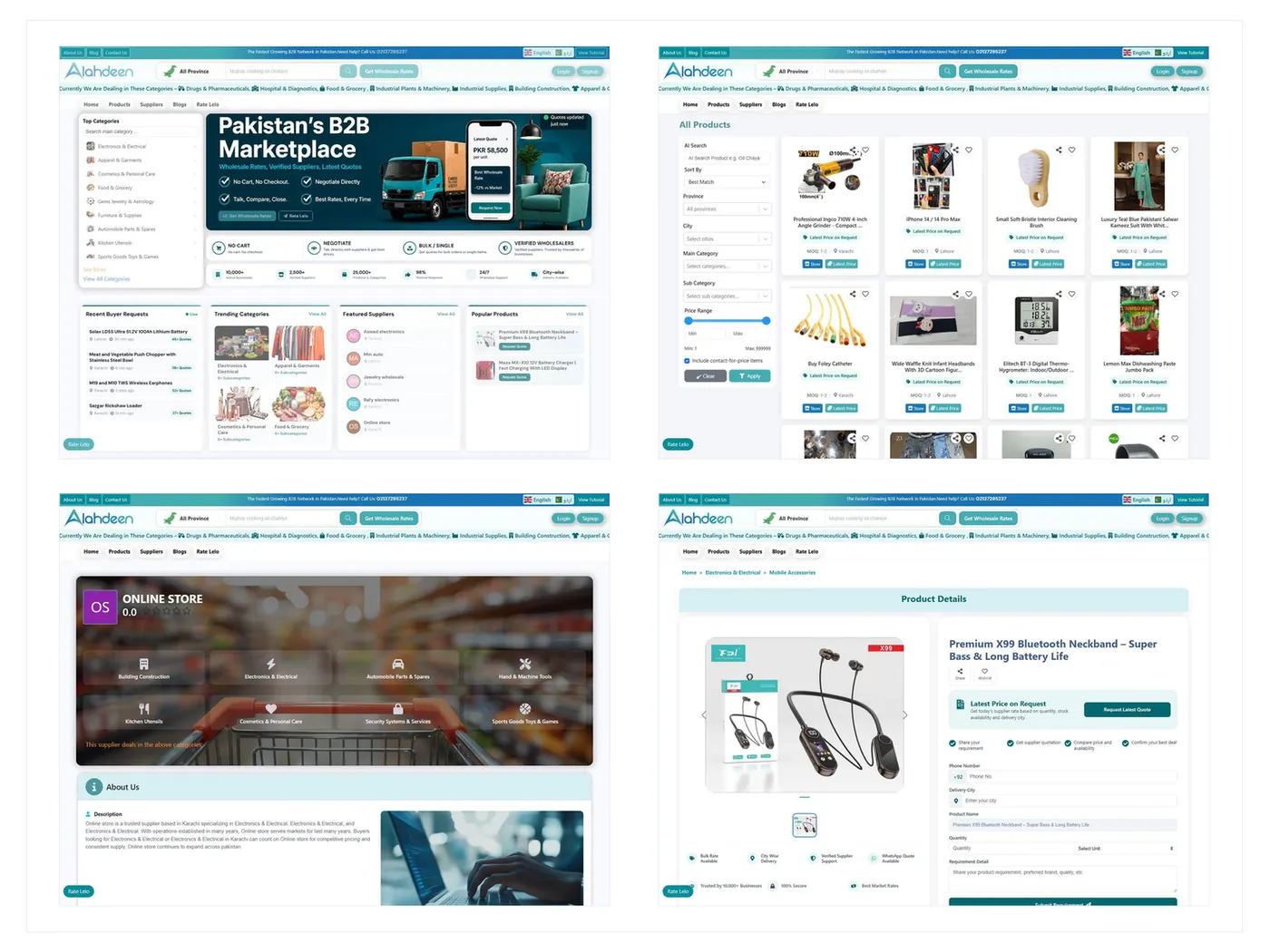
B2B Marketplace
A multi-vendor B2B marketplace connecting wholesale buyers, suppliers, catalogs, storefronts, leads, quotations, and seller operations.
View detail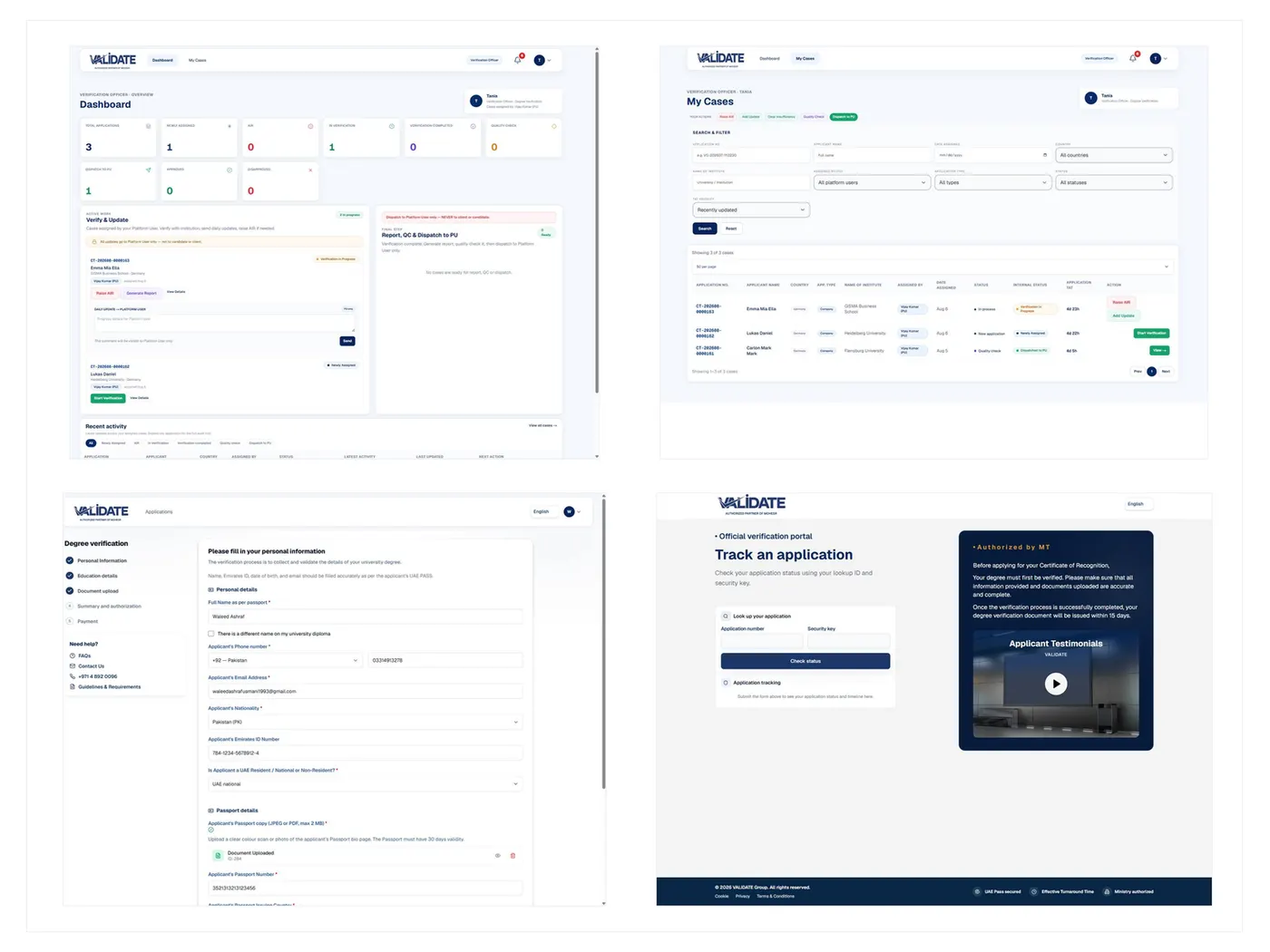
Verification / RegTech
A five-portal verification operations system for applicants, company administrators, processing teams, verification officers, and super administrators.
View detail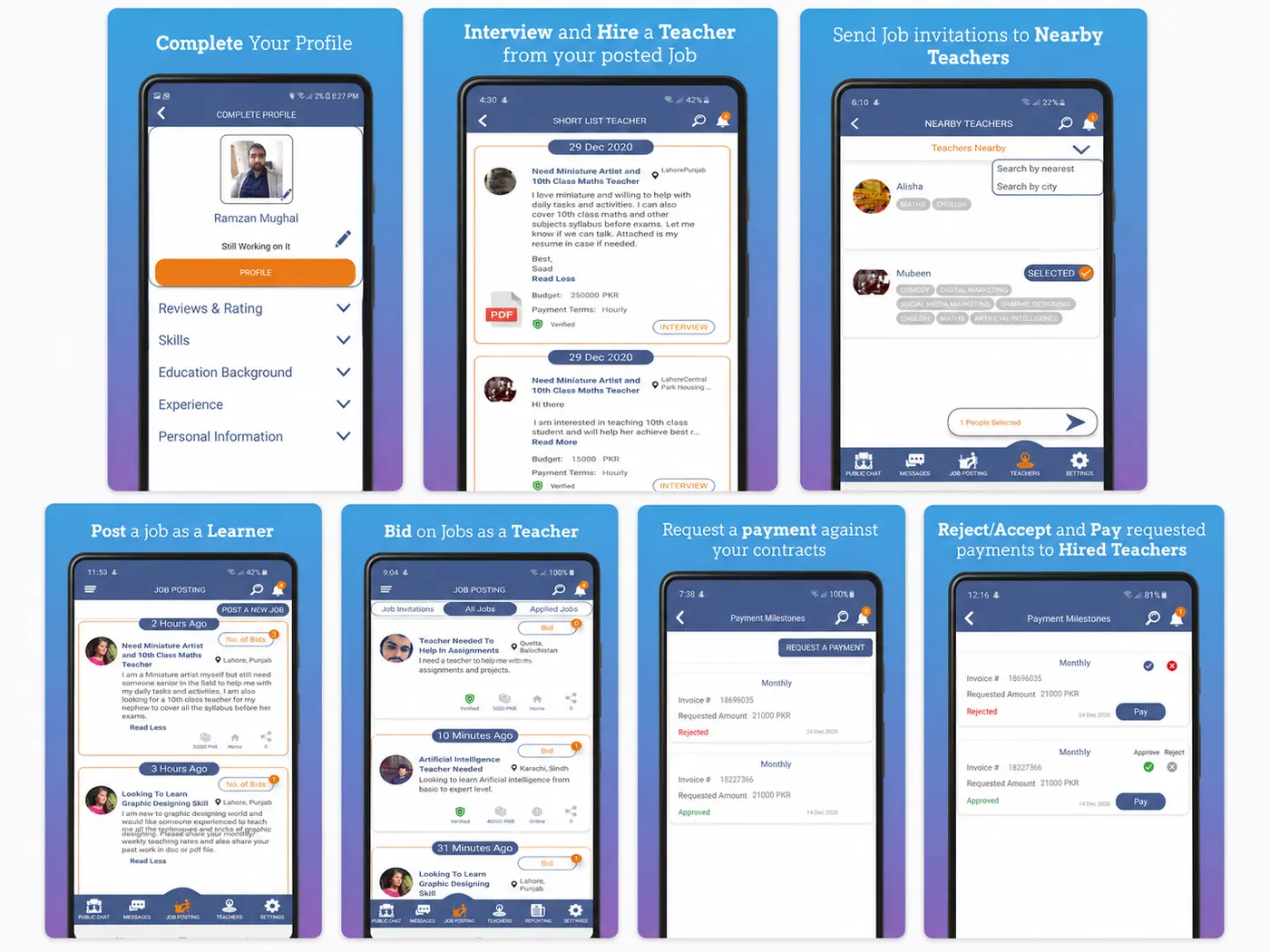
EdTech Marketplace
A two-sided learning marketplace mobile app connecting students and teachers through jobs, bids, profiles, chat, interviews, engagement decisions, and payment requests.
View detailExplore more
This case study turns Enterprise AI workflow platform into a fuller buyer journey: the software problem, the product pressure, the architecture support behind execution, and the next step for US and UK businesses facing similar growth pressure.
Digital Product Agency model: Strategy, Design, Technology, and Growth.
Product strategy, discovery, MVP roadmap, and go-to-market before expensive builds.
Product design, design systems, web/mobile UX, and conversion-focused interfaces.
Product engineering for SaaS, AI, web, and mobile — architecture as support, not the brand.
Clarify ICP, MVP boundaries, and roadmap so design and engineering build the right product.
View detailValidate B2B workflows and buyer friction before you hard-code assumptions.
View detailDesign SaaS experiences that make complex workflows clear, trustworthy, and usable.
View detailGrow demand with SEO and growth work tied to offers you can actually deliver.
View detailSaaS, AI, web, mobile, backend APIs, and DevOps — inside the same Digital Product Agency model as Strategy, Design, and Growth.
Frontend, backend, APIs, databases, subscriptions, dashboards, integrations, and deployment.
View detailAI-enabled products, automation, LLM workflows, orchestration, and production readiness.
View detailPortals, dashboards, admin tools, workflow platforms, and custom web applications.
View detailiOS and Android delivery connected to shared APIs, auth, notifications, and product data.
View detailSecure APIs, roles, permissions, integrations, queues, webhooks, payments, and data foundations.
View detailCI/CD, cloud ops, monitoring, and production support connected to product delivery.
View detailMove into proof, insights, or a conversation when the challenge is clear enough to discuss.
Compare Strategy, Design, Technology, and Growth paths.
View detailFlagship projects across SaaS, marketplaces, web, and mobile.
View detailHow strategy, design, and engineering connect to outcomes.
View detailPractical guidance for scaling product and engineering teams.
View detailNamed proof around delivery and partnership quality.
View detailBring the product challenge into a direct conversation.
View detailBring the current delivery, reliability, or architecture pressure into a direct conversation. We will help you clarify the next practical sequence.