
Case Studies
Architecture outcomes from real engagements — designed to reduce risk, improve delivery, and support scale.
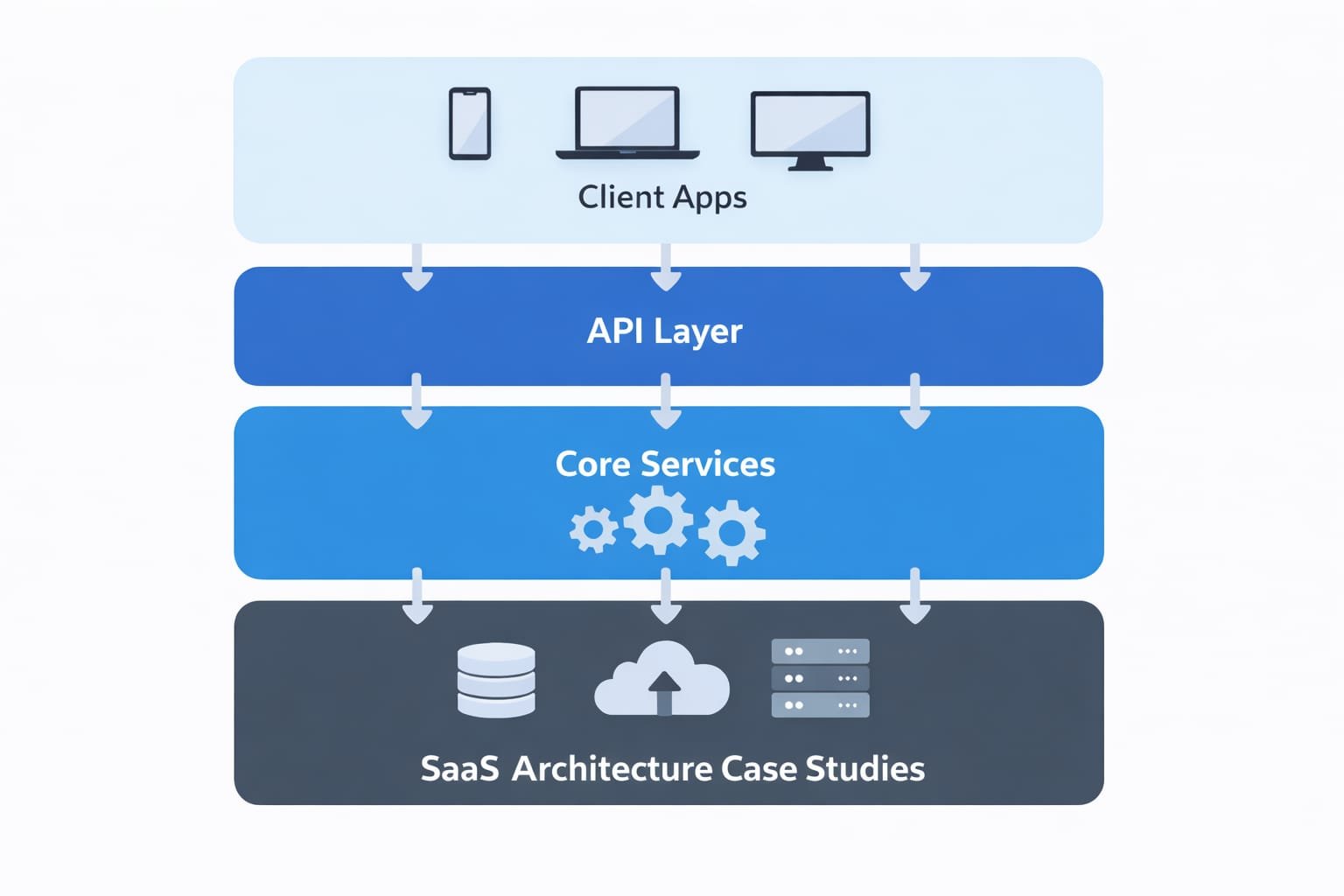
Real SaaS Architecture Case Studies
These SaaS architecture case studies highlight structured system design decisions, scalability planning,
and performance direction applied in real engagements with growing SaaS teams.
Each case focuses on execution-ready outcomes: clearer boundaries, reduced technical debt, improved reliability,
and a practical roadmap engineering teams can confidently implement.
These SaaS architecture case studies document how practical architectural decisions improve delivery, reduce risk,
and create stability before scale introduces complexity. Each engagement is approached as a system: boundaries, ownership, data flow,
and failure handling are defined in a way that engineering teams can execute without slowing down.
Case studies typically include the product context, key constraints, the architectural challenge, decisions made, and the outcomes.
Where relevant, they also cover performance direction (bottleneck identification, caching strategy, database guidance, and API shaping),
as well as modernization planning (risk reduction, phased refactoring, and roadmap prioritization).
Zyvor focuses on execution-ready clarity — not academic diagrams. That means decisions are translated into a roadmap your team can follow:
what to change first, what to avoid, and how to structure the work so delivery stays predictable. When teams have clarity, velocity increases,
technical debt reduces, and reliability improves.
If you’re evaluating architecture support, these SaaS architecture case studies help you understand how outcomes are achieved:
clear boundaries, safer core flows, and performance planning that supports growth.
For performance measurement concepts, see Google’s guidance on
Core Web Vitals.
Featured work
A small set of representative engagements. More will be added as Zyvor grows.
Scalable marketplace architecture with booking & payments
Defined boundaries and core flows with execution-ready guidance — enabling growth without rebuild risk.
Audit → prioritized roadmap to reduce technical debt
Coming next: a structured audit case study showing risk areas, prioritization, and delivery improvements.
Performance direction to stabilize APIs under growth
Coming next: bottleneck diagnosis + caching/data strategy to improve response times and reliability.
What These Case Studies Demonstrate
- Clear service boundaries and ownership models that reduce architectural ambiguity
- Performance stabilization and scalability planning before high-load growth phases
- Modernization roadmaps to reduce technical debt without risky rebuilds
- Execution-ready decisions aligned with product stage and delivery constraints
If you want a similar outcome, start with a focused review call — you’ll get clarity on risks, priorities,
and the best next step within 24–48 hours.
How SaaS Architecture Case Studies Translate Into Business Impact
SaaS architecture case studies are not just technical summaries — they show how structured architectural
decisions reduce risk before scale introduces instability. When boundaries are clearly defined and
ownership is aligned, engineering teams ship faster with fewer regressions.
Performance direction ensures APIs remain stable under growth, database queries stay efficient,
and infrastructure scales predictably. Instead of reacting to production failures,
teams operate with confidence and long-term clarity.
These SaaS architecture case studies demonstrate that technical leadership is not about rewriting systems —
it is about structured prioritization, risk reduction, and execution alignment that supports sustainable product growth.
Want a similar outcome for your product?
Start with a focused Architecture Review Call to identify risks and define the right next steps.