
Product pressure
What the business needed to make true before the next stage of growth.
Case Study
VALIDATE Group
B2B Corporate Website
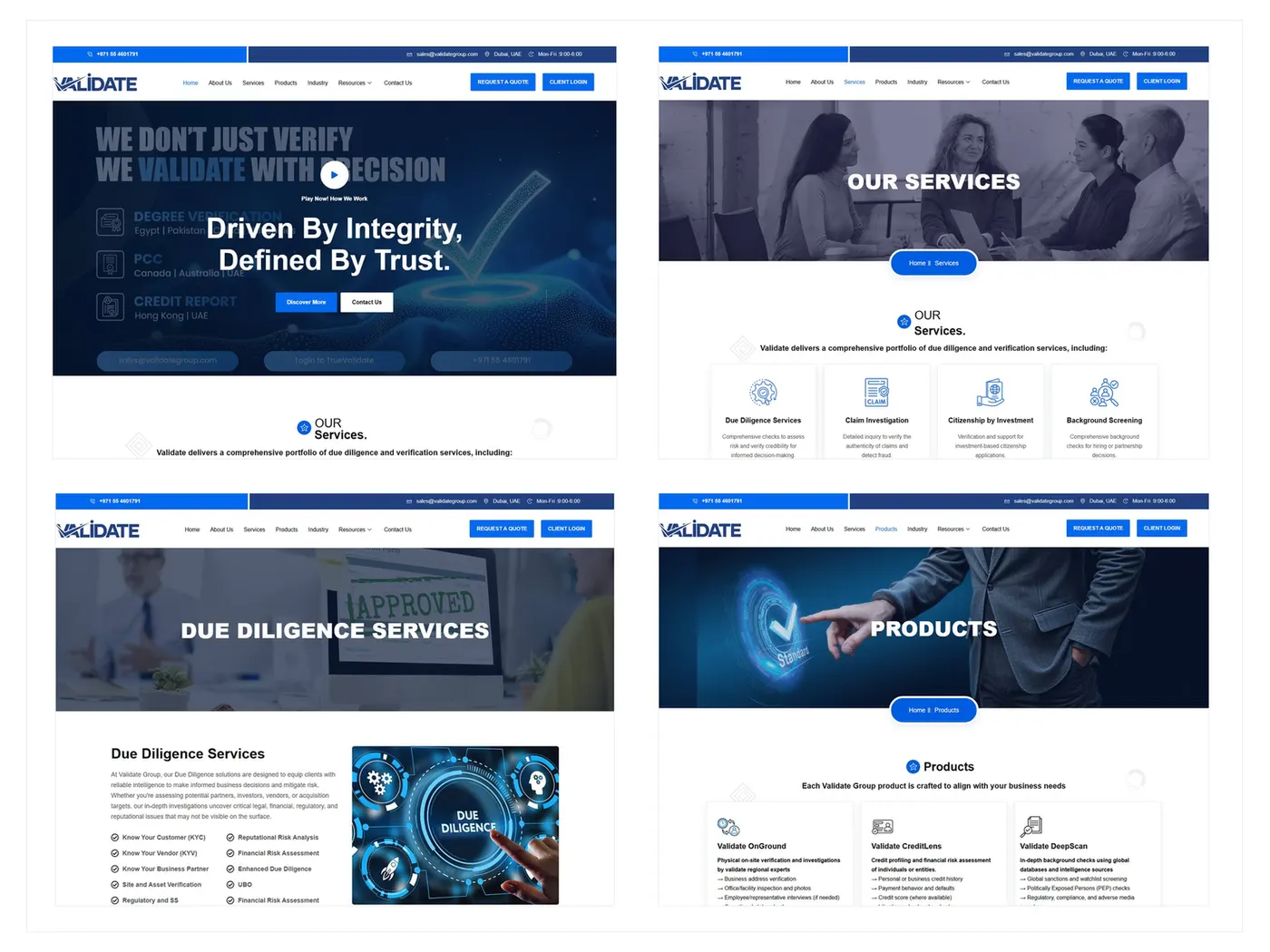
Zyvor designed and developed the VALIDATE Group website so verification, due diligence, products, trust content and enquiry journeys could be understood by prospective clients — not only by people who already knew the company.
Clarity as the conversion system.
Industry
Professional Services
Services
UX, Information Architecture, Web Design & Development, SEO
Engagement
Design and development
Timeline
July 2024 – January 2026
Product type
B2B corporate website
Case study structure
Overview
Zyvor designed and developed the VALIDATE Group website so verification, due diligence, products, trust content and enquiry journeys could be understood by prospective clients — not only by people who already knew the company.
What the business needed to make true before the next stage of growth.
How strategy, design, and engineering stayed connected through the engagement.
The decisions that kept ownership, state, and next actions clear for the team.
Why the work was sequenced for trust, scale, and a reusable foundation.
Challenge
VALIDATE offers verification and due-diligence services that can overwhelm first-time visitors. If navigation mirrors internal departments, buyers never reach a confident enquiry.
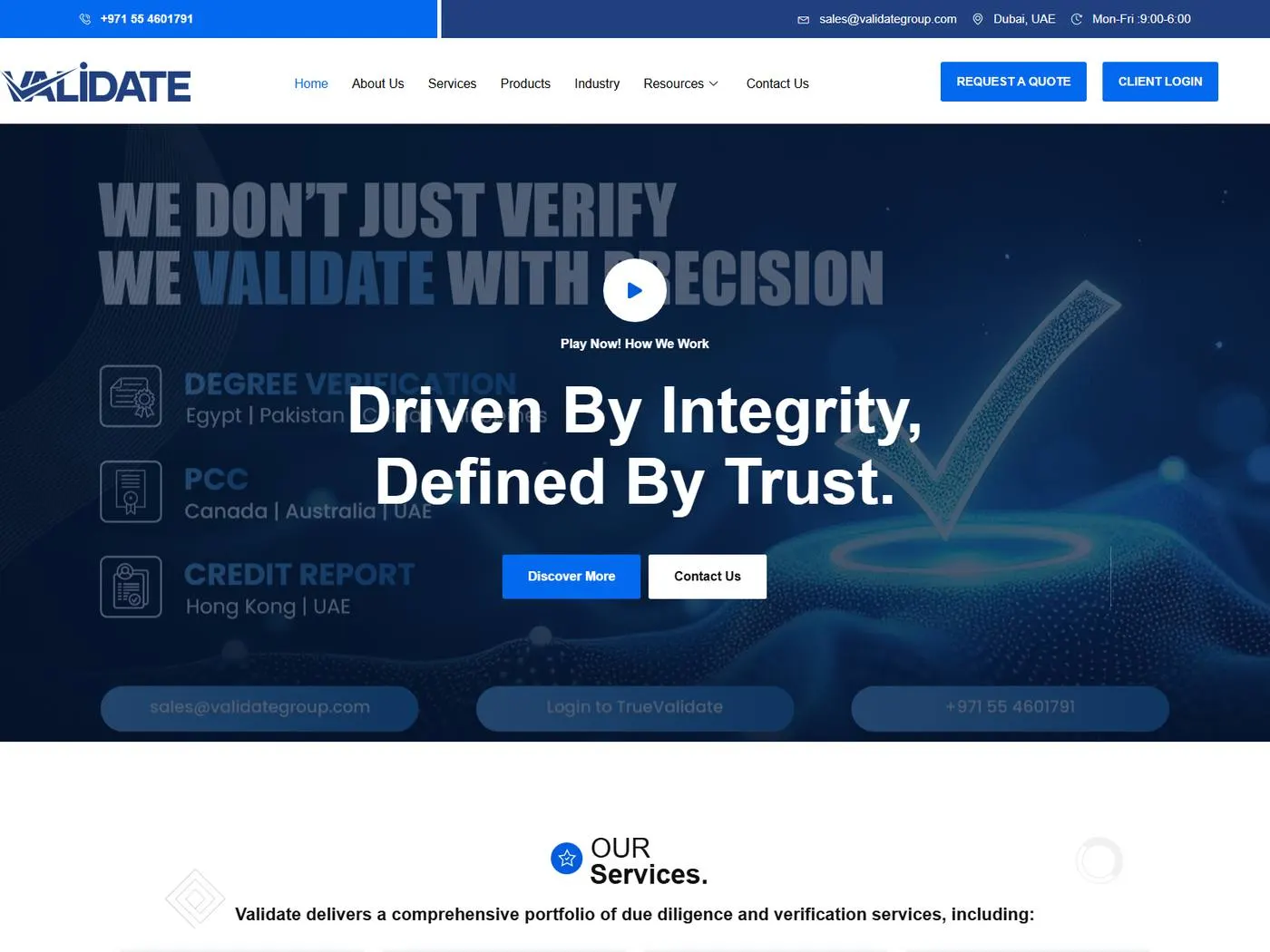
Signal
Homepage
Context
User intent over company org chart.
Trust-led corporate entry point for verification and due-diligence services.
The company needed a professional digital presence that could explain complex B2B offerings and still convert into conversations.
Prospective clients needed to discover, understand and evaluate services without decoding internal structure.
Content had to be CMS-managed so service and product pages could expand without a redesign each time.
Scattered trust proof, inconsistent page structures and enquiry forms that appeared too late all blocked conversion.
What was breaking
The friction points that made the old approach expensive to keep.
Navigation that mirrored internal departments
Every service page using a different structure
Trust content separated from evaluation
Forms appearing after the buyer lost context
Unclear path from service understanding to enquiry
Strategy
A reusable service and product structure would make complex offerings easier to scan, keep trust next to evaluation, and place enquiry actions inside the journey.
Group navigation around buyer needs
Use reusable service and product page structures
Position enquiry actions inside relevant journeys
Keep CMS content maintainable for future expansion
Solution
Zyvor structured the site around user intent, then built responsive WordPress pages, enquiry workflows, performance work and technical SEO on top of that structure.
Discover
Mapped how buyers look for verification and due-diligence support, and where the old story became insider language.
Define
Set information architecture, reusable page patterns and the Discover → Enquire journey.
Design
Created a trust-led corporate experience with clear service and product destinations.
Build
Implemented WordPress structures, enquiry workflows, performance optimisation and technical SEO.
Launch / Scale
Left a maintainable CMS so services and products can expand without a new information model.
Strategy — Key Decisions
These are the choices that shaped the product — not a gallery of what shipped, but why the work was sequenced this way.
Buyers will not enquire if they have to learn the company’s internal map first.
Consistent structure makes complex offerings comparable and easier to maintain.
Proof is more useful beside the service being considered than in a distant about section.
Forms should appear while context is still present, not after the visitor has bounced.
A B2B service site has to grow pages without inventing a new layout each time.
Design
Visitors should be able to understand verification and due-diligence offerings, see why they can trust the firm, and enquire without friction.
For complex B2B services, clarity is not decoration. It is the conversion system.
Corporate homepage as a trust-led entry, not a brochure dump
Service and due-diligence pages that share a readable structure
Certificate verification and products as evaluation destinations
Responsive layouts that keep enquiry usable on mobile
Trust, clarity and accessibility
Professional services sites have to reduce uncertainty, not add marketing noise
Enquiry should feel like a continuation of evaluation
Performance and technical SEO support discoverability without stuffing pages
Homepage
Trust-led corporate entry point for verification and due-diligence services.
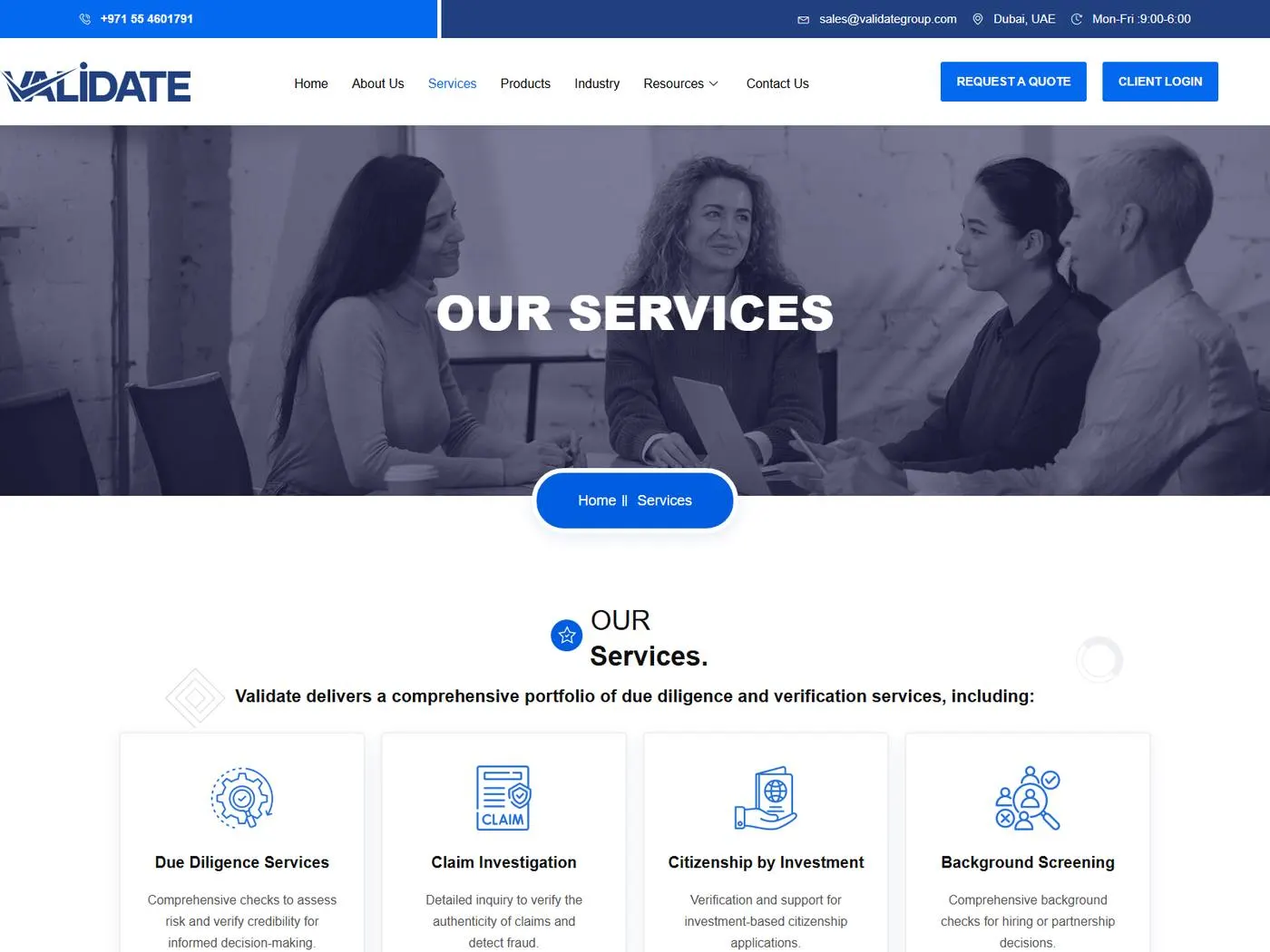
Services
Service discovery structure for complex B2B offerings.
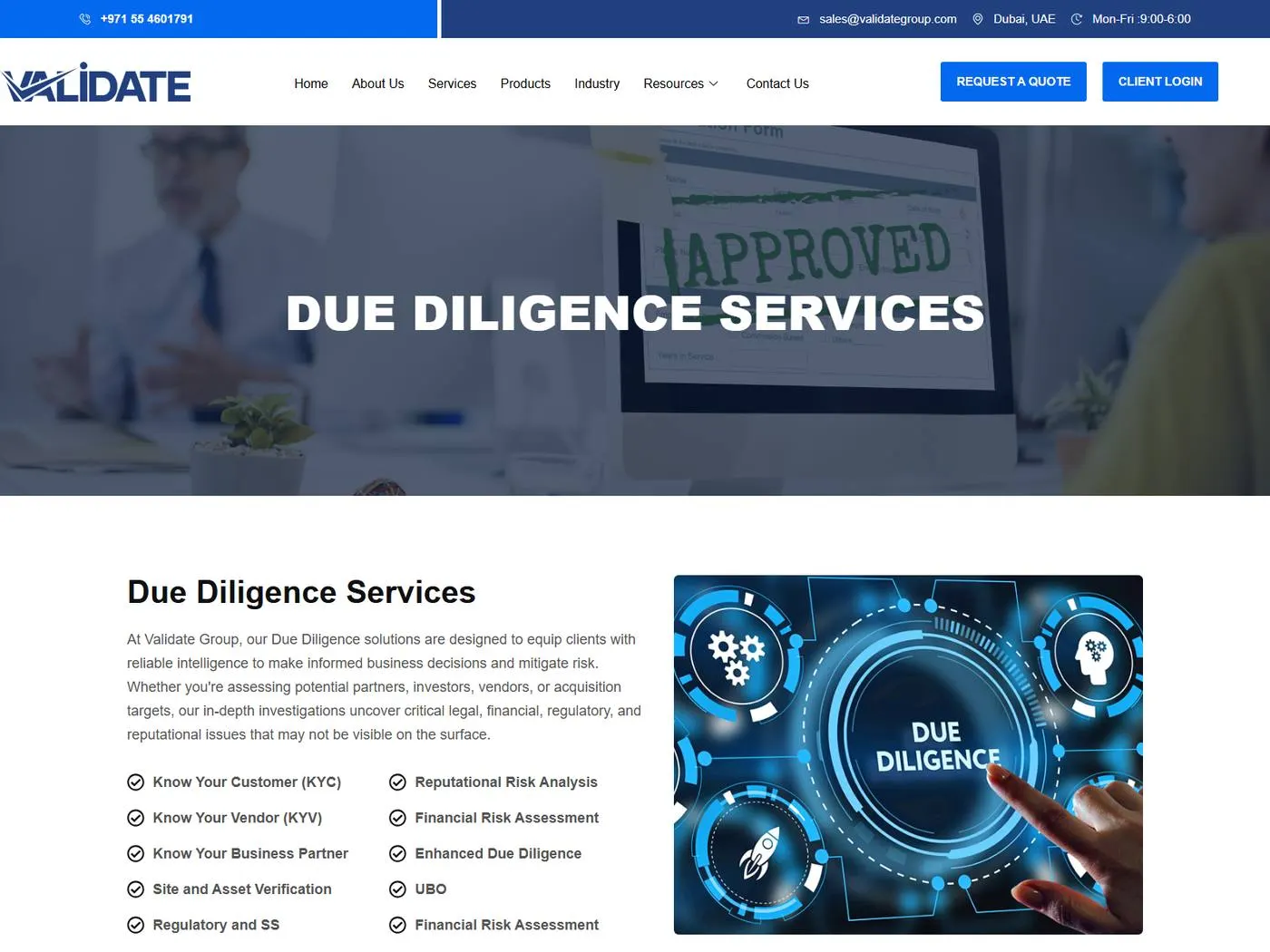
Due diligence
Due diligence page structure with reusable service content.
Development
The website was built in WordPress with PHP, MySQL, page-builder structures, MetForm enquiry workflows, analytics and SEO tooling — designed to stay editable after launch.
WordPress structures that marketing and operations can maintain.
Reusable service, product and due-diligence page patterns.
Conversion paths placed inside relevant journeys.
Performance optimisation, technical SEO and analytics.
Key Features
Trust-led entry for verification and due-diligence services.
Discovery structure for complex B2B offerings.
Reusable service content for evaluation.
A concrete product path connected to enquiry.
Portfolio pages that support comparison and contact.
Content that helps buyers understand before they enquire.
Contact paths that keep service context intact.
The same journey on desktop and mobile.
Outcome
VALIDATE gained a professional, trust-led B2B presence, reusable structures for service expansion, stronger enquiry pathways and a maintainable WordPress website.
Verification and due-diligence offerings are easier to understand from the outside.
New service and product pages can follow the same pattern.
Contact sits inside evaluation instead of at the end of a maze.
CMS-managed content keeps the site operable after launch.
Technology
The tools that supported delivery — chosen for the product shape, not as a generic stack list.
Key Takeaways
Navigation should follow how clients evaluate services, not how the firm is organised.
Consistency is what makes complex offerings comparable.
Proof works harder beside the service being evaluated.
A beautiful site that cannot be updated will drift out of date.
Related Case Studies
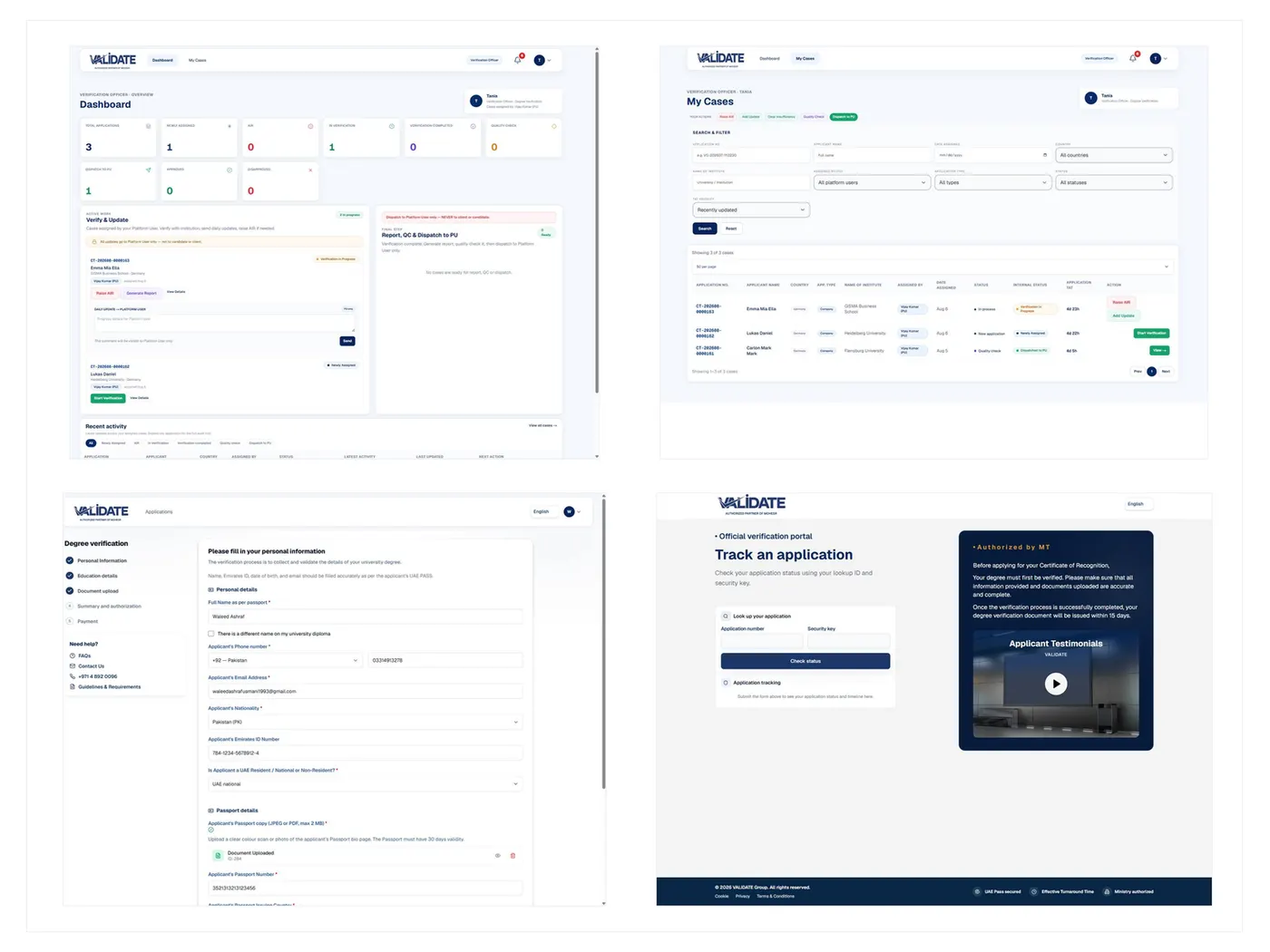
Verification / RegTech
From fragmented verification handoffs to one controlled operating model.
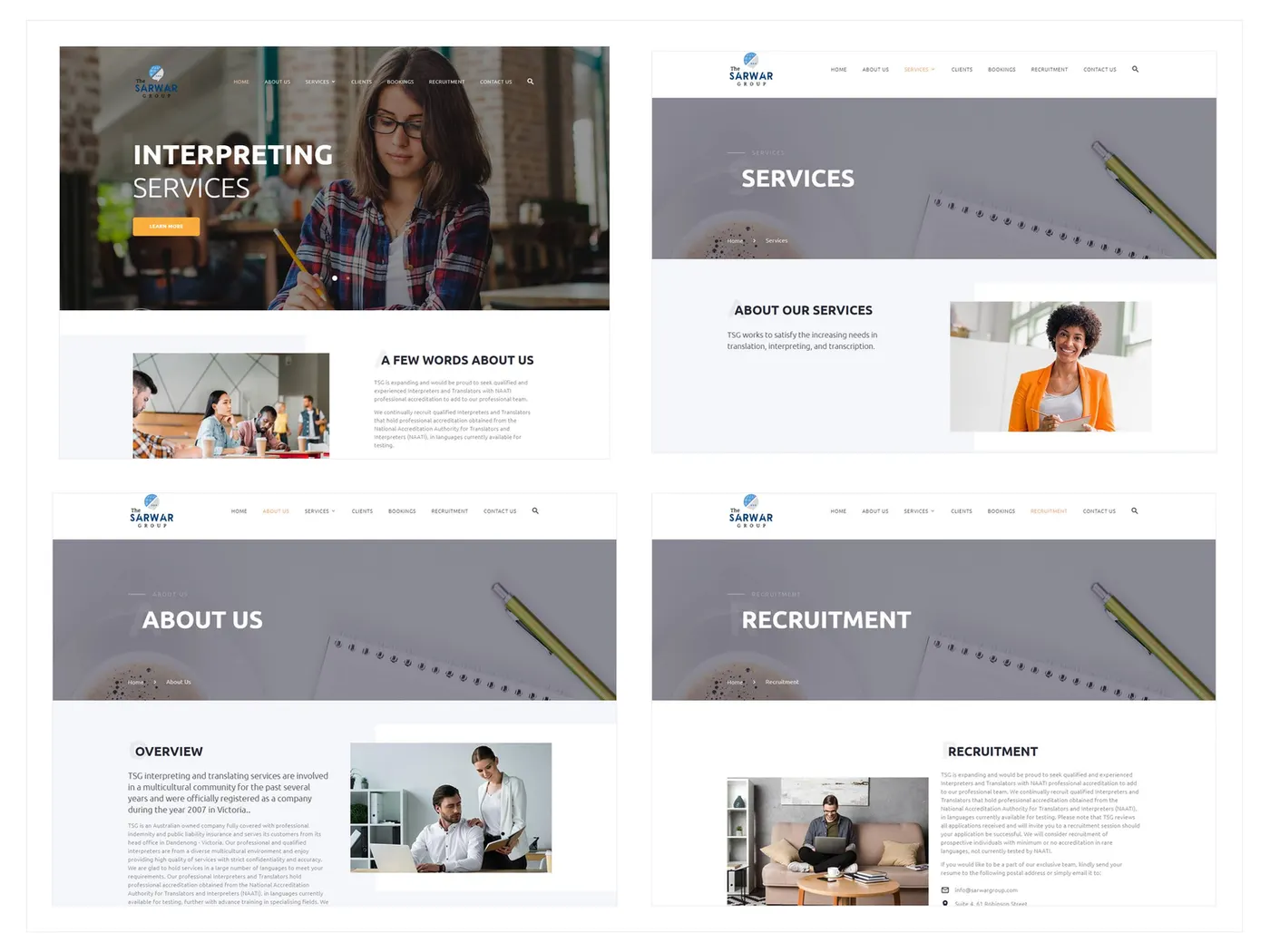
Corporate Website
From competing service stories to one corporate presence.
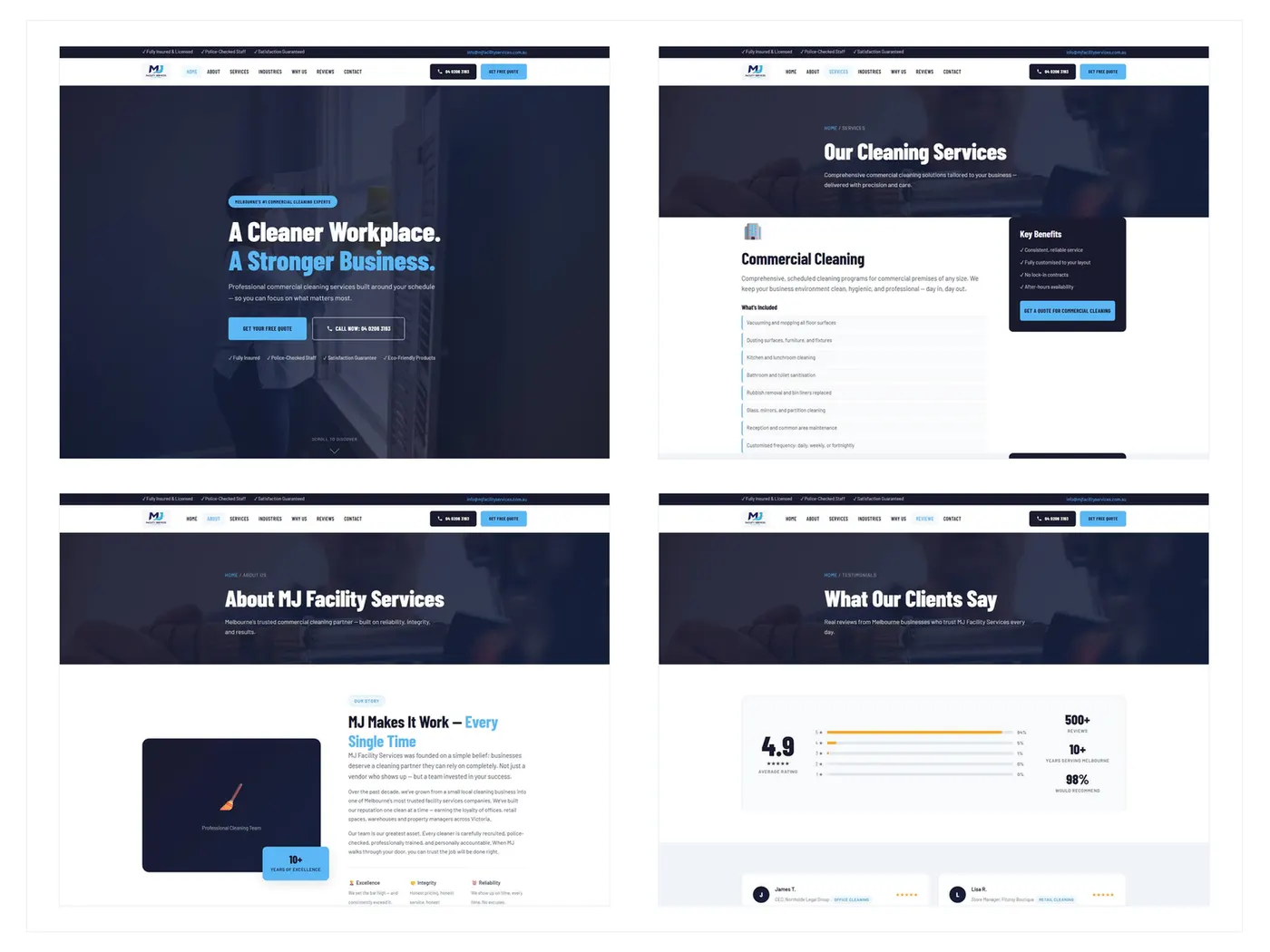
B2B Service Website
From a generic brochure to a B2B site built around the quote.
Next step
If this story feels close to the pressure in your product, the useful next step is a conversation about the problem — not another gallery of screens.