
Product pressure
What the business needed to make true before the next stage of growth.
Case Study
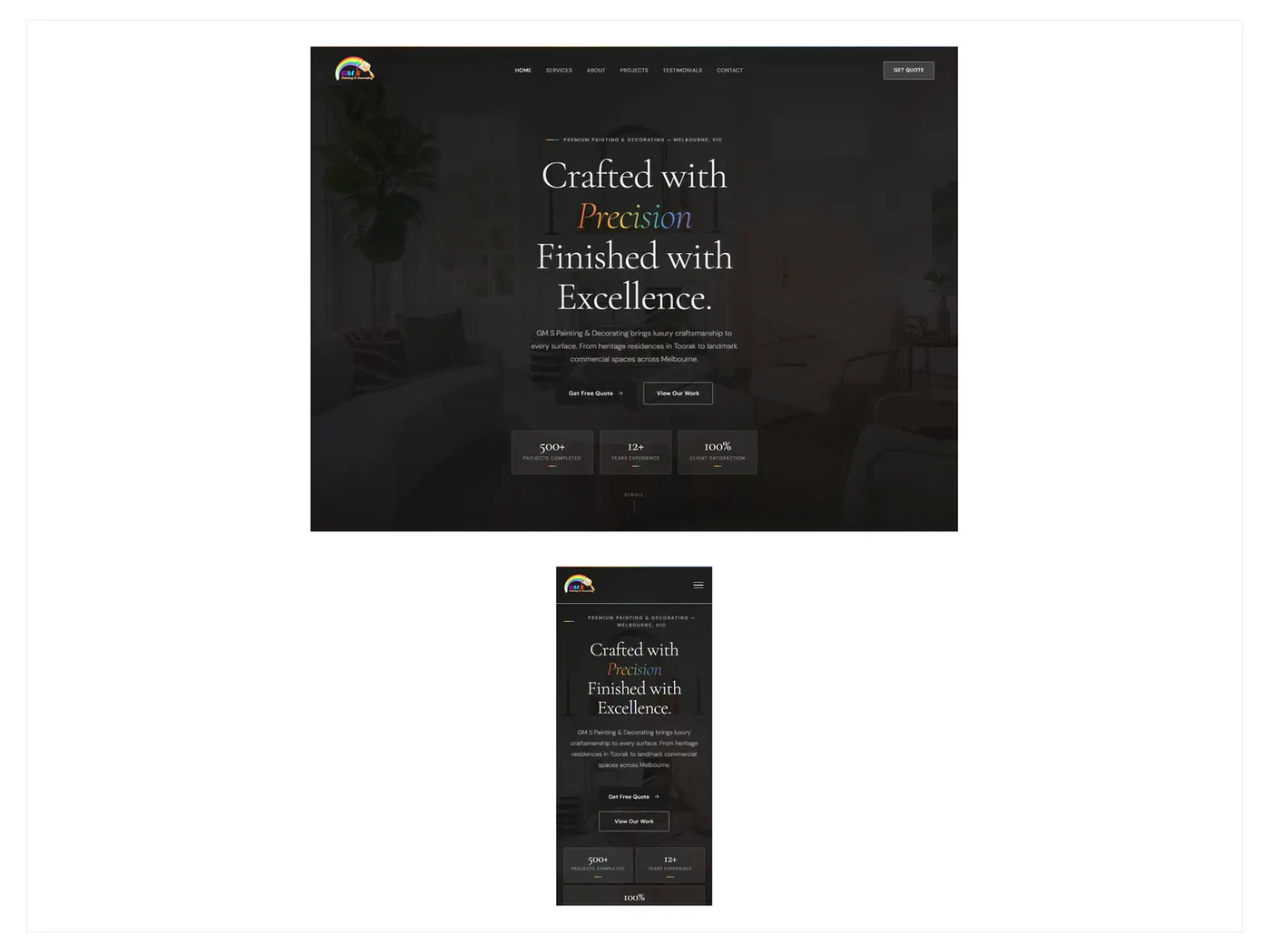
GMS Painting & Decorating
Lead Generation Website
Zyvor designed and developed a responsive painting-services website focused on local trust, service discovery, mobile usability, project visibility and enquiry conversion — so visitors could understand the work and get in touch quickly.
The right enquiry, made easy.
Industry
Home Services / Painting & Decorating
Services
Web Design, Lead-generation UX, Development, Local SEO foundations
Engagement
Design and development
Timeline
August 2021 – October 2021
Product type
Local service lead-generation website
Case study structure
Overview
Zyvor designed and developed a responsive painting-services website focused on local trust, service discovery, mobile usability, project visibility and enquiry conversion — so visitors could understand the work and get in touch quickly.
What the business needed to make true before the next stage of growth.
How strategy, design, and engineering stayed connected through the engagement.
The decisions that kept ownership, state, and next actions clear for the team.
Why the work was sequenced for trust, scale, and a reusable foundation.
Challenge
Local service visitors want to know what the business does, whether it looks credible, and how to enquire — especially on a phone. A site can look finished and still hide the action.
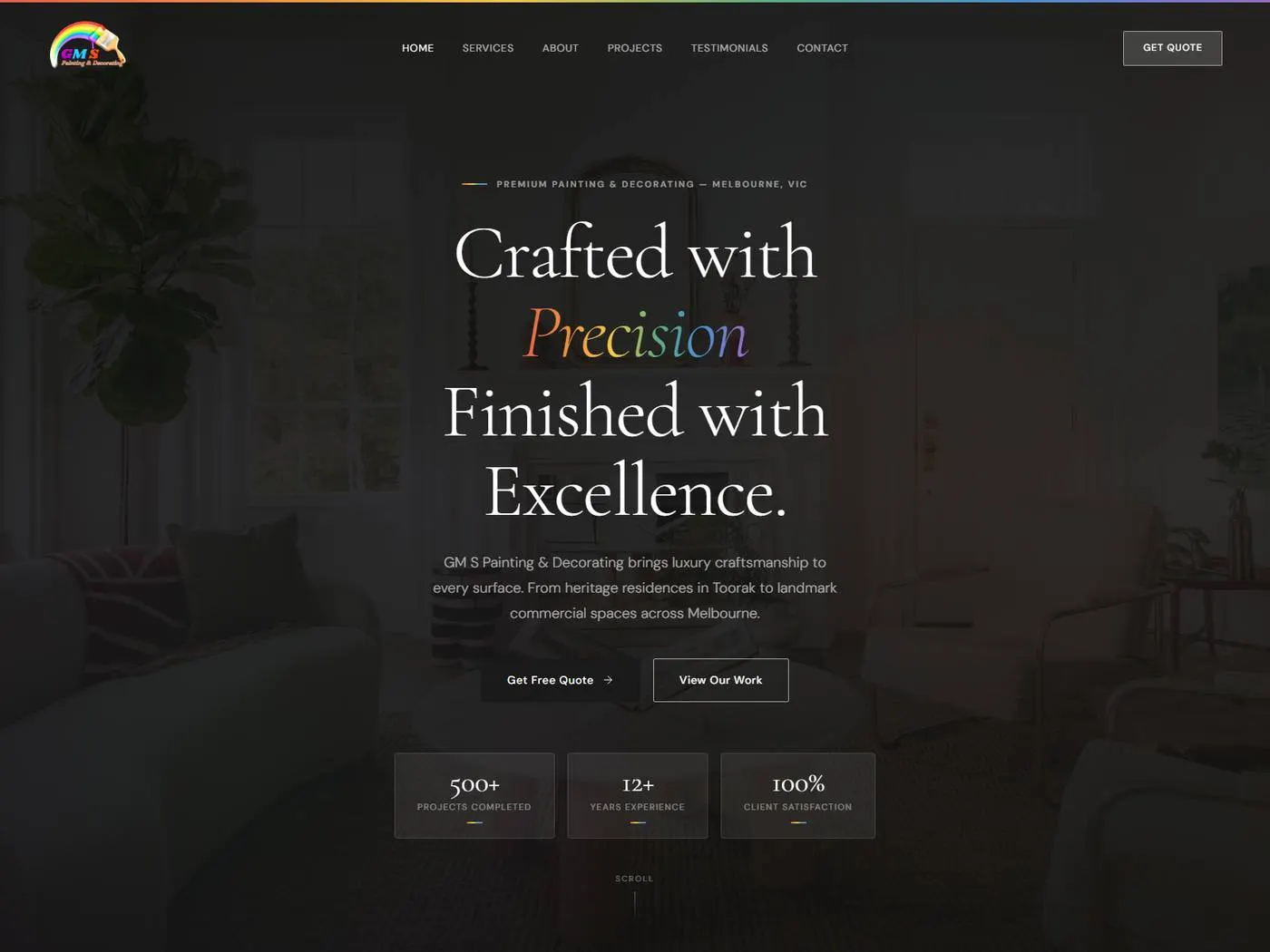
Signal
Homepage
Context
Make the next enquiry obvious.
Lead-generation homepage focused on service clarity and trust.
GMS needed a digital presence capable of explaining services, building local credibility and converting visitors into enquiries.
Homeowners and local buyers needed to scan services, see proof and contact the business without digging.
Content and forms had to stay maintainable after launch, with local SEO foundations built in.
Generic marketing copy, buried contact actions and project proof disconnected from services would have wasted demand.
What was breaking
The friction points that made the old approach expensive to keep.
Services hidden behind generic marketing copy
Mobile visitors scrolling too far to contact the business
Project proof disconnected from service pages
Forms present but not framed around buyer intent
Local trust signals not close enough to the enquiry
Strategy
If the site led with clear service positioning, kept proof close, and made contact easy on mobile, more of the right visitors would enquire.
Lead with clear service positioning
Use responsive layouts for mobile-first decisions
Keep trust and project visibility close to service content
Make contact and quote actions easy to find
Solution
Zyvor designed the site around local intent, then built responsive pages, lead-generation flows, contact integration, performance preparation and technical SEO.
Discover
Identified what local painting-service visitors need to see before they will enquire.
Define
Set information architecture around services, about, project visibility and contact.
Design
Created a mobile-first layout that keeps trust and enquiry in reach.
Build
Implemented the site, forms, analytics, SEO foundations, QA and deployment.
Launch / Scale
Left a maintainable content structure for future service and project updates.
Strategy — Key Decisions
These are the choices that shaped the product — not a gallery of what shipped, but why the work was sequenced this way.
Visitors decide in seconds whether the business does the work they need.
Local buyers often arrive on a phone and will not hunt for a contact form.
Project visibility and credibility have to support the service being considered.
The website’s job is a better enquiry, not a longer about page.
Discoverability has to be designed into the site, not added as keywords later.
Design
A visitor should understand the painting service, feel the business is credible, and enquire in the same visit — especially on mobile.
For local services, the best website is the one that makes the right enquiry easy.
Homepage focused on service clarity and trust
Mobile layout that preserves the core enquiry path
Direct contact actions in key sections
Project/gallery content close to service context where available
Trust, clarity and accessibility
Local buyers use professionalism as a proxy for workmanship
Contact should feel immediate, not hidden in the footer
Performance and SEO foundations support the same conversion goal
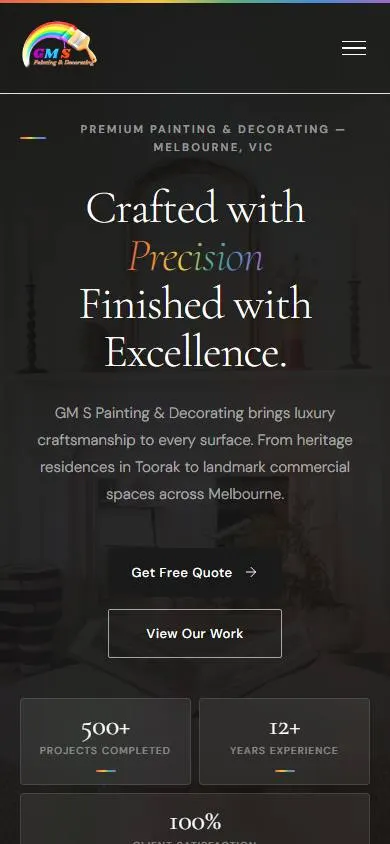
Homepage
Lead-generation homepage focused on service clarity and trust.
Mobile homepage
Mobile experience preserving the core enquiry path.
Development
The site was delivered with HTML, CSS, JavaScript, a CMS/forms layer where present, analytics, SEO tooling and hosting/SSL, with QA and deployment coordination.
Service discovery and contact actions designed together.
Mobile layouts that keep enquiry in reach.
Enquiry flows framed around buyer intent.
Technical SEO, analytics and production hosting.
Key Features
Service clarity and trust at the first screen.
What painting and decorating work is offered.
Local credibility without burying the enquiry.
Proof close to the service being considered.
A direct path to talk to the business.
The same conversion path on a phone.
Lead capture framed around real local intent.
Structure that supports local discovery.
Outcome
The project established a professional local-service web presence with clearer service discovery, improved mobile usability, stronger trust communication and direct enquiry pathways.
Visitors can tell what the business does without decoding marketing copy.
The enquiry path stays available on a phone.
Credibility sits next to the service, not in a separate silo.
Contact is a primary action, not a footer afterthought.
Technology
The tools that supported delivery — chosen for the product shape, not as a generic stack list.
Key Takeaways
Local visitors need to recognise the work before they will read the story.
The enquiry path has to work on the device most people will use.
Project visibility supports the service being considered.
A professional site still fails if the next step is hard to find.
Related Case Studies
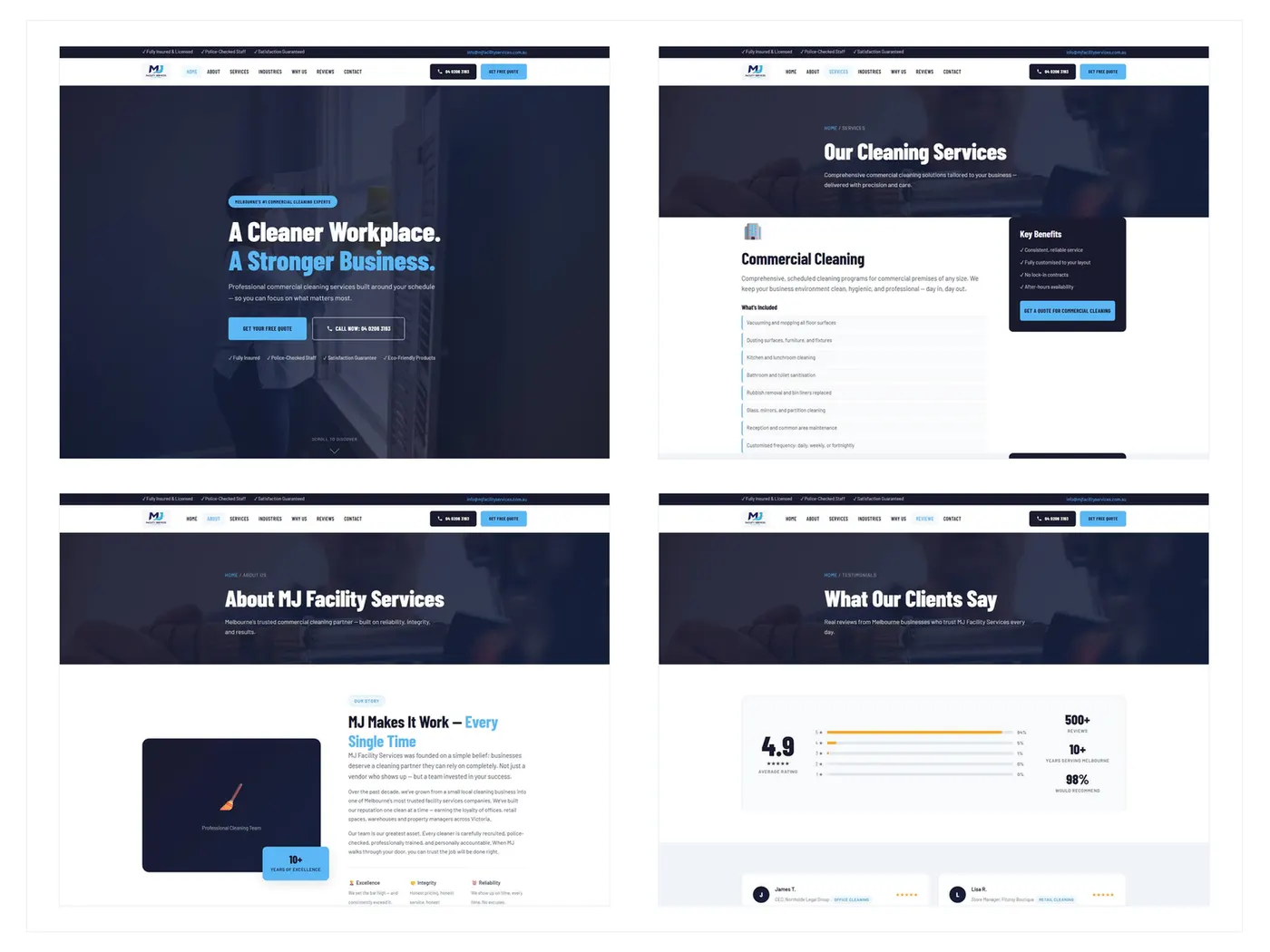
B2B Service Website
From a generic brochure to a B2B site built around the quote.
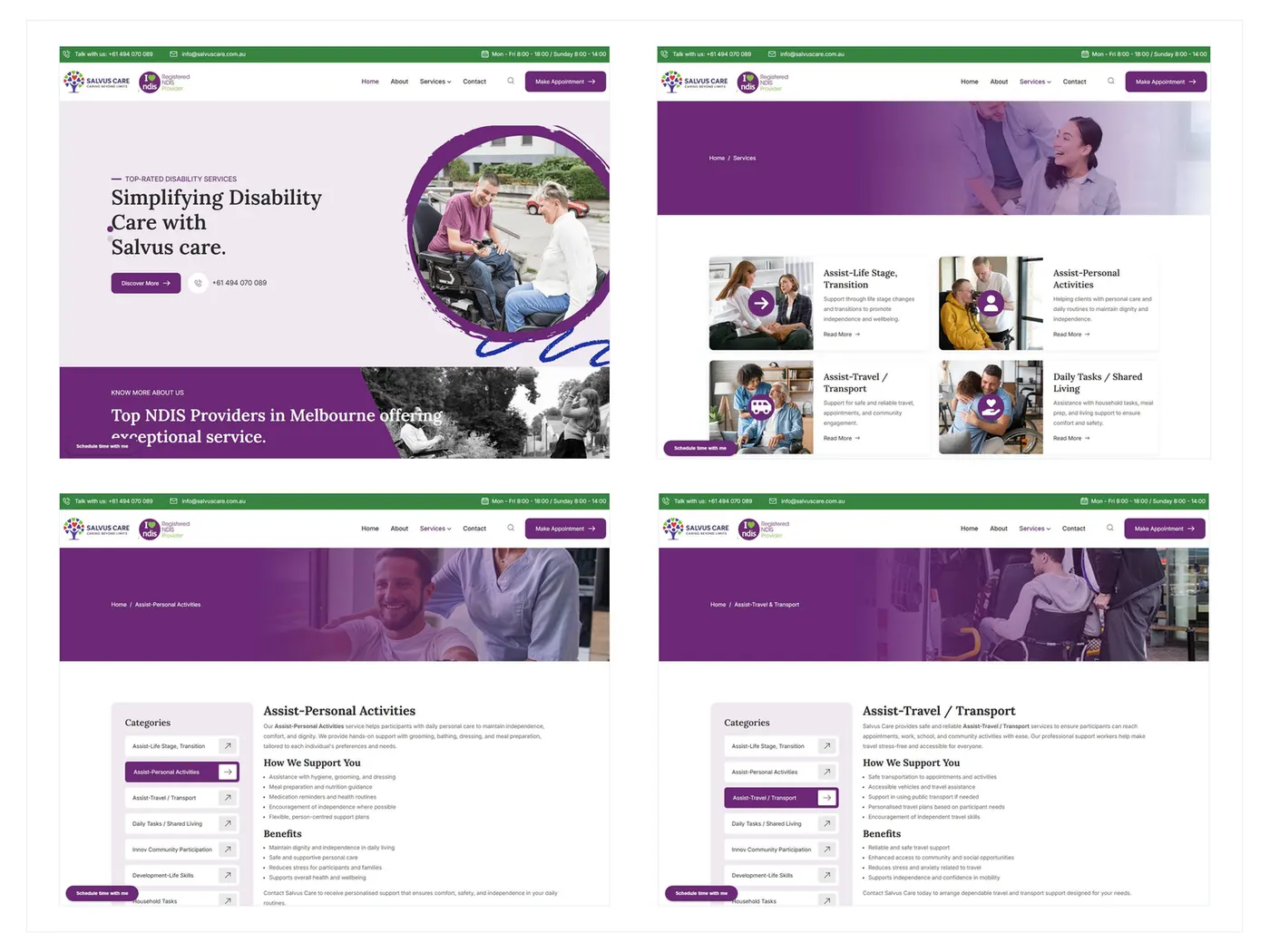
Care Services Website
From a confusing care directory to an accessible path families can follow.
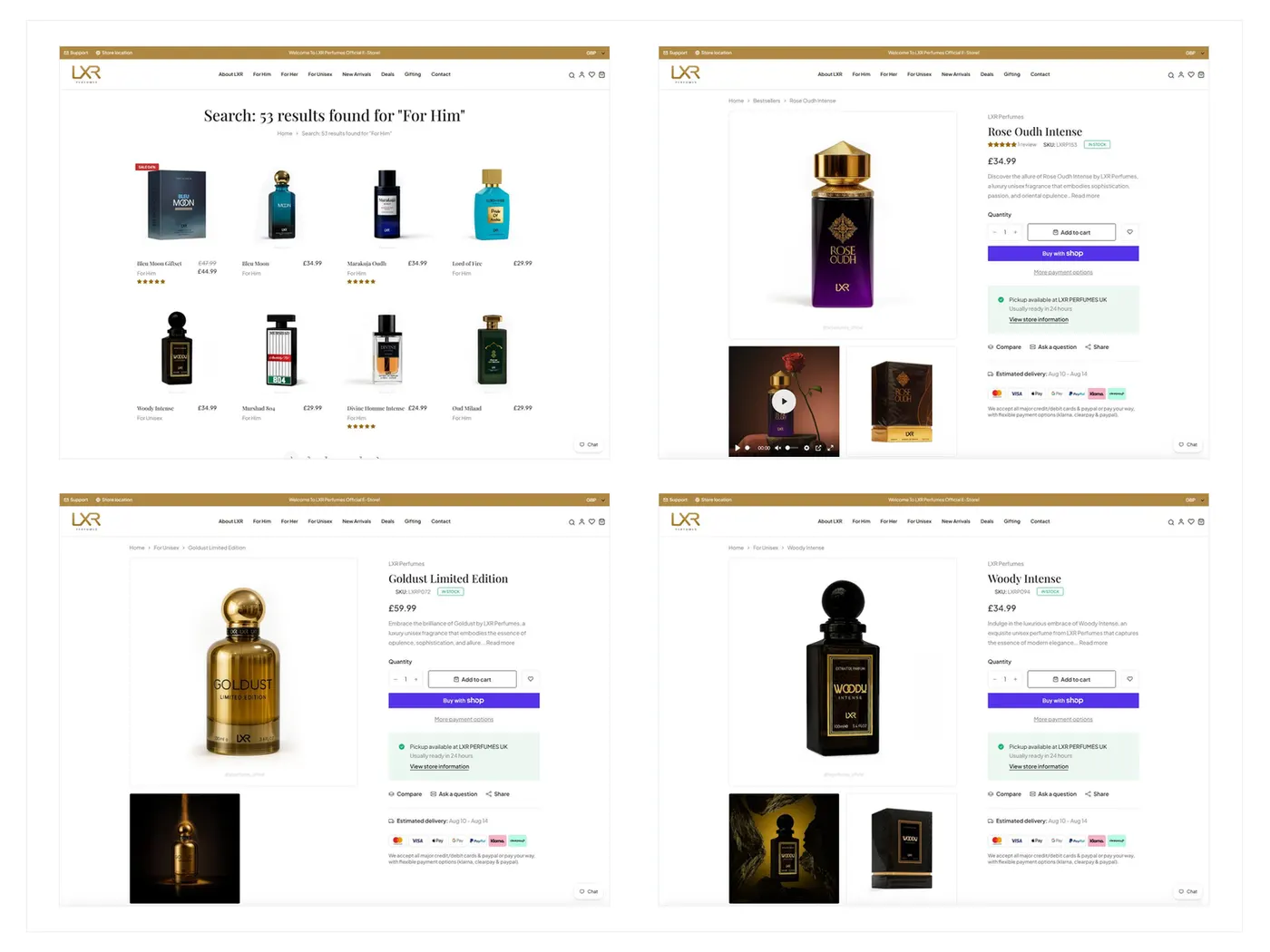
Luxury eCommerce
From one-off product pages to a luxury store that is practical to run.
Next step
If this story feels close to the pressure in your product, the useful next step is a conversation about the problem — not another gallery of screens.