
Product pressure
What the business needed to make true before the next stage of growth.
Case Study
Alahdeen
B2B Marketplace
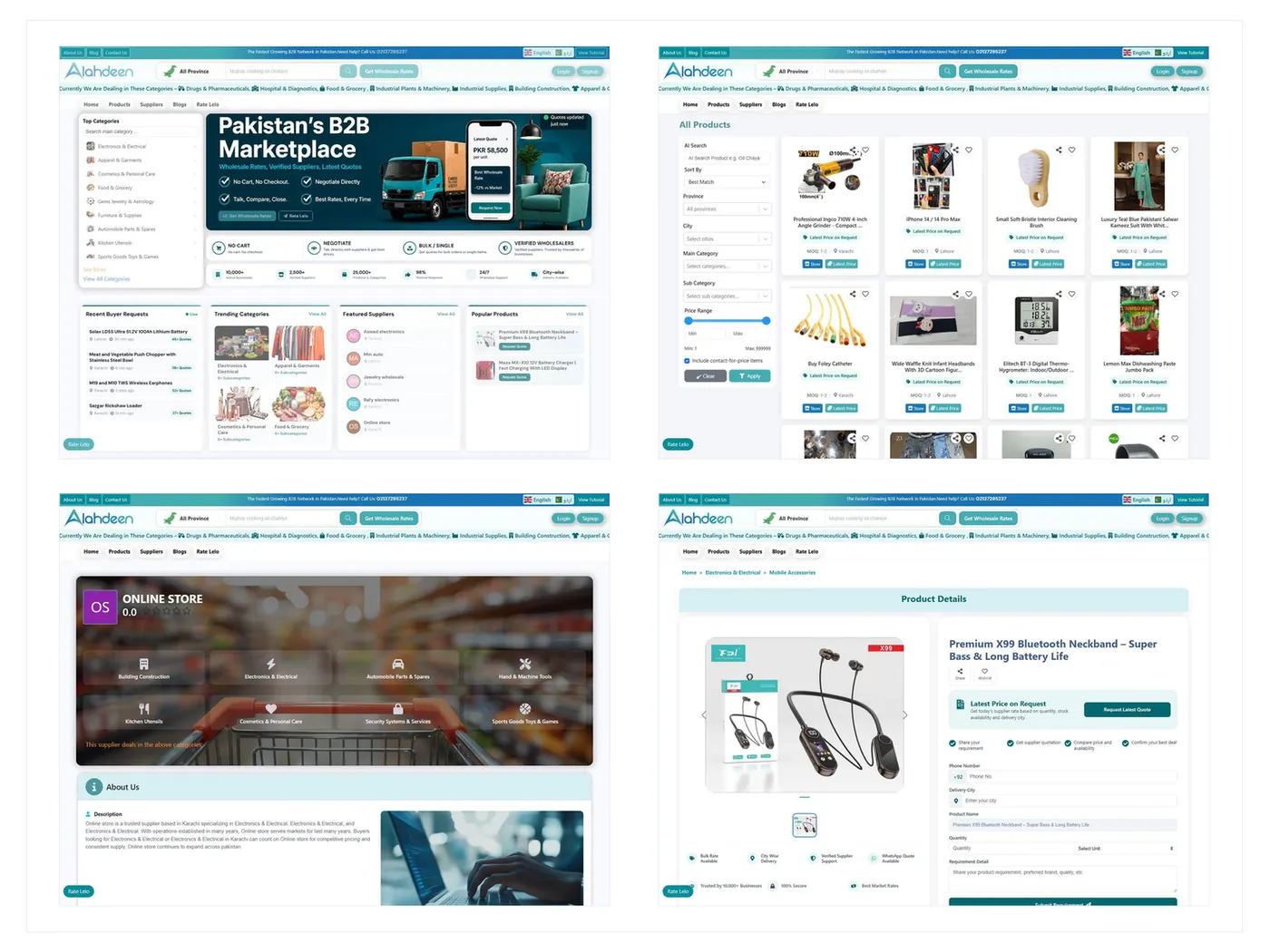
Zyvor partnered with Alahdeen to design and build a multi-vendor B2B marketplace where wholesale buyers, suppliers, catalogs, storefronts, leads and quotations could live in one commercial system — across web and mobile.
A stronger commercial foundation.
Industry
B2B Marketplace / Commerce
Services
Product Strategy, Architecture, Design, Web & Mobile Development
Engagement
Product engineering with strong architecture
Timeline
April 2022 – June 2024
Product type
Multi-vendor B2B marketplace
Case study structure
Overview
Zyvor partnered with Alahdeen to design and build a multi-vendor B2B marketplace where wholesale buyers, suppliers, catalogs, storefronts, leads and quotations could live in one commercial system — across web and mobile.
What the business needed to make true before the next stage of growth.
How strategy, design, and engineering stayed connected through the engagement.
The decisions that kept ownership, state, and next actions clear for the team.
Why the work was sequenced for trust, scale, and a reusable foundation.
Challenge
Wholesale buying is not a simpler version of retail. Suppliers own catalogs, buyers need discovery and commercial enquiry, and seller operations have to stay connected to the same marketplace data.
Signal
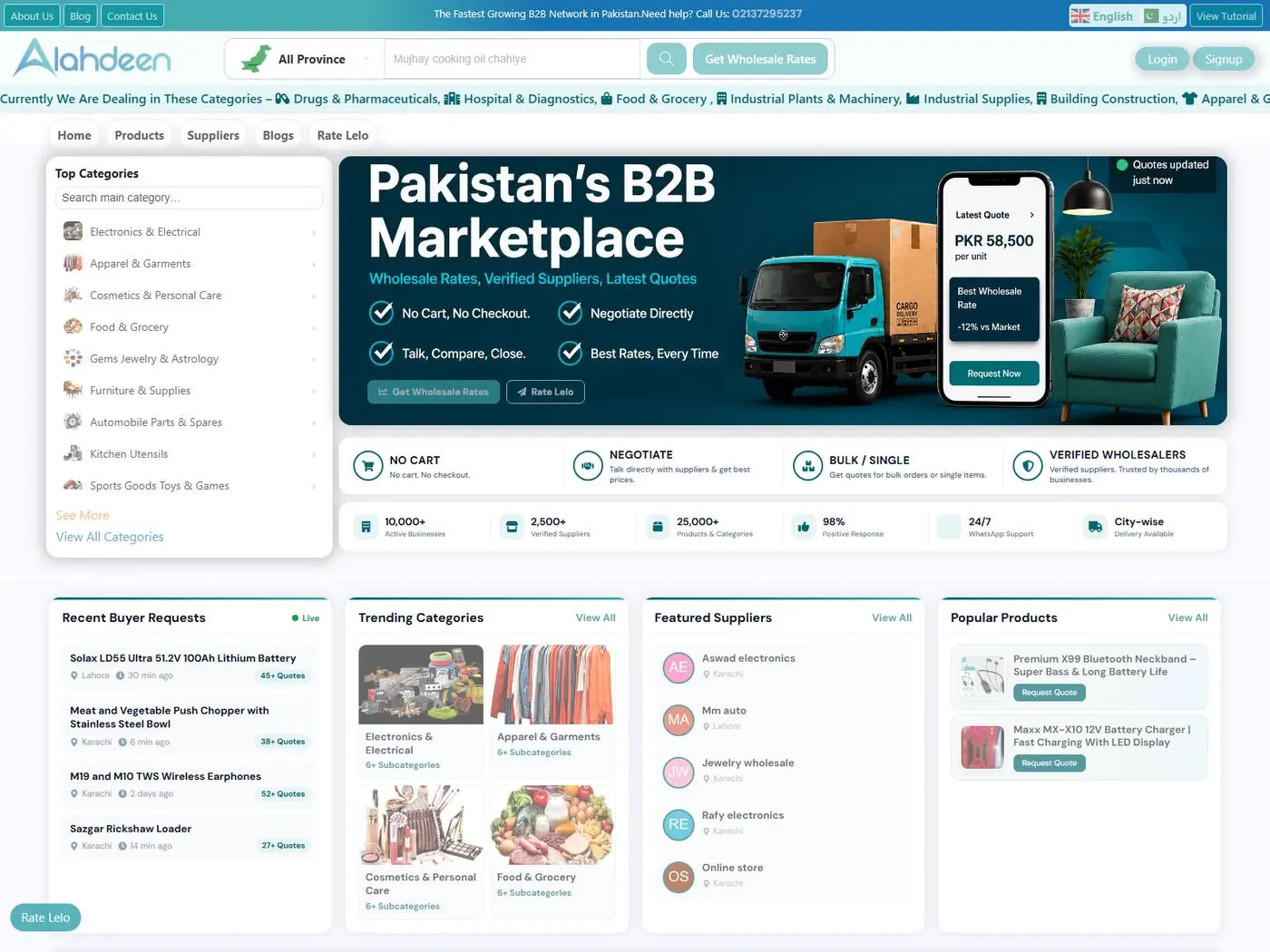
Marketplace homepage
Context
Marketplace architecture, not only commerce UI.
Buyer-facing marketplace discovery across categories, suppliers, and product areas.
The platform had to support multiple suppliers, large product sets, commercial leads and quotations without collapsing into a generic catalog website.
Buyers needed to find products and suppliers. Sellers needed workflows for storefronts, catalog ownership and marketplace activity.
Leads, quotations and seller work could not live in email or admin back-office if the marketplace was going to scale.
Traditional eCommerce patterns ignore supplier ownership, quotation states and separated buyer/seller experiences.
What was breaking
The friction points that made the old approach expensive to keep.
Supplier data treated like a static brand label
No shared catalog ownership model
Leads and quotations bolted on too late
Seller operations depending on manual admin work
Web and mobile drifting into separate business logic
Strategy
If buyers and sellers could share one catalog and one set of commercial states, the product could grow suppliers, categories and channels without rebuilding the marketplace twice.
Separate buyer discovery from seller operations
Give suppliers real ownership of products and storefronts
Make leads and quotations visible, stateful workflows
Serve web and mobile from reusable APIs
Solution
Zyvor designed a shared marketplace domain first, then built the buyer and seller surfaces, catalog services and commercial workflows that connect web and mobile.
Discover
Mapped wholesale buyers, suppliers, catalog ownership, leads and quotations as one commercial system.
Define
Shaped the marketplace model: supplier storefronts, product ownership, search and commercial states.
Design
Created distinct buyer and seller experiences over the same catalog and activity model.
Build
Implemented catalog, search, storefronts, leads, quotations, seller mobile and reusable APIs.
Launch / Scale
Validated integrations and release support so supplier and catalog expansion could continue.
Strategy — Key Decisions
These are the choices that shaped the product — not a gallery of what shipped, but why the work was sequenced this way.
A conventional storefront cannot represent supplier ownership, competing catalogs or seller operations.
Each side needs a different journey, but they still have to agree on products, leads and quotation state.
Search, storefronts and mobile channels only stay consistent if the catalog is a shared service.
B2B enquiry is a workflow with states, not a contact form attached to a product page.
Seller mobile and buyer web had to grow from the same commercial logic instead of two codepaths.
Design
Buyers should find products and suppliers quickly. Sellers should manage storefronts, catalog and commercial activity without leaving the marketplace.
The interface should reveal the commercial model: who owns the product, how enquiry works, and what happens after a lead is created.
Category, search and product-detail paths for buyer discovery
Supplier profiles and storefronts as first-class destinations
Quotation and lead surfaces connected to product context
Mobile seller workflows aligned with the same marketplace states
Trust, clarity and accessibility
Supplier identity has to feel real, not like a product filter
Commercial next steps should be visible from the product page
Web and mobile should not disagree on catalog or activity status
Marketplace homepage
Buyer-facing marketplace discovery across categories, suppliers, and product areas.
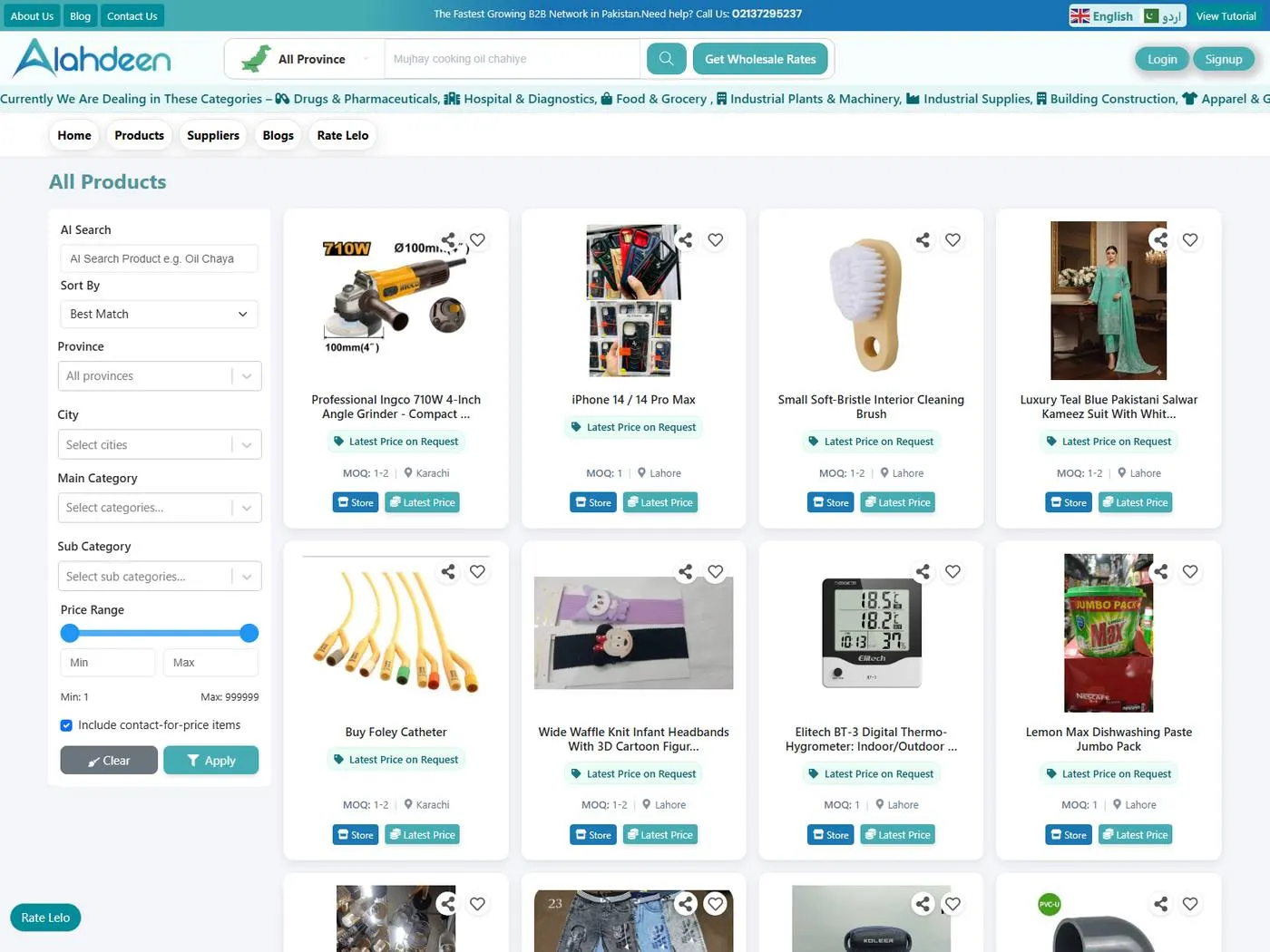
Search experience
Product search experience connected to the marketplace catalog.
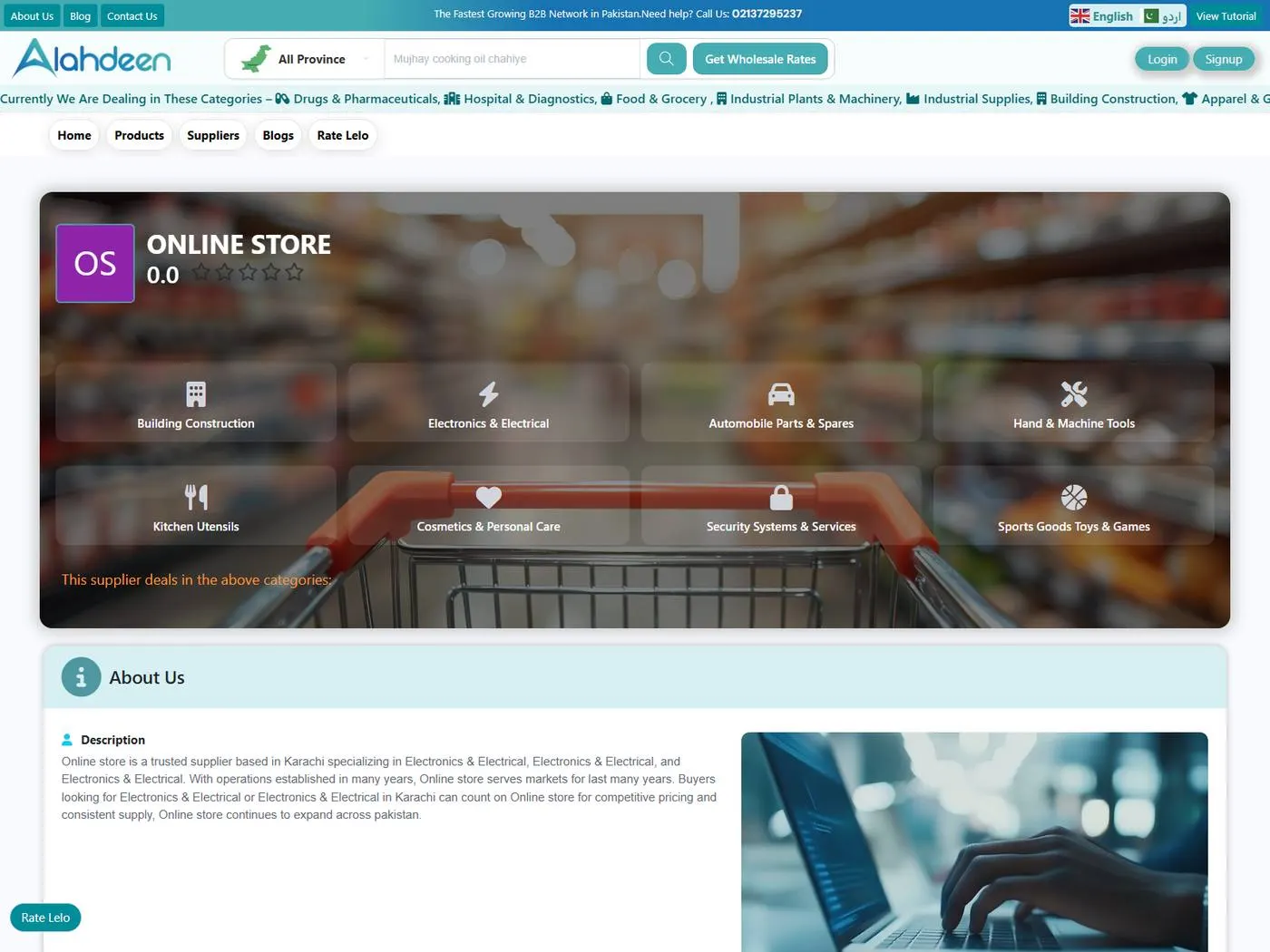
Supplier storefront
Supplier-owned storefront experience inside the shared marketplace model.
Development
The build used Laravel, Node.js, relational data, catalog/search services, media storage and notification services so web, Android and APIs could share one commercial core.
Laravel, Node.js, REST APIs and relational data for marketplace operations.
Shared product, category, search and media services across channels.
Android seller application connected to the same marketplace workflows.
Notifications, analytics and cloud deployment to support live marketplace activity.
Key Features
Discovery across categories, suppliers and product areas.
Shared product catalog with filtering and product detail.
Supplier-owned destinations inside the marketplace.
Commercial enquiry captured in marketplace context.
Explicit quotation lifecycle instead of informal follow-up.
Operations for catalog, activity and marketplace management.
Mobile seller experience connected to the same APIs.
Marketplace activity surfaced to the right side of the relationship.
Outcome
Alahdeen established a structured B2B marketplace where buyers could discover products and suppliers while sellers managed activity through connected workflows.
Categories, search, storefronts and product pages work as a marketplace, not a single-brand shop.
Sellers can manage marketplace activity instead of relying on disconnected admin work.
Leads and quotations are states in the system, not side conversations.
Web and mobile share APIs, so catalog and supplier expansion does not require a rebuild.
Technology
The tools that supported delivery — chosen for the product shape, not as a generic stack list.
Key Takeaways
B2B marketplaces fail when suppliers are treated as labels on products instead of operators in the system.
Buyer discovery and seller operations need different UX over the same commercial truth.
Leads and quotations only work when the product can explain what happens next.
Web and mobile should reuse catalog and workflow services, not invent parallel marketplaces.
Related Case Studies
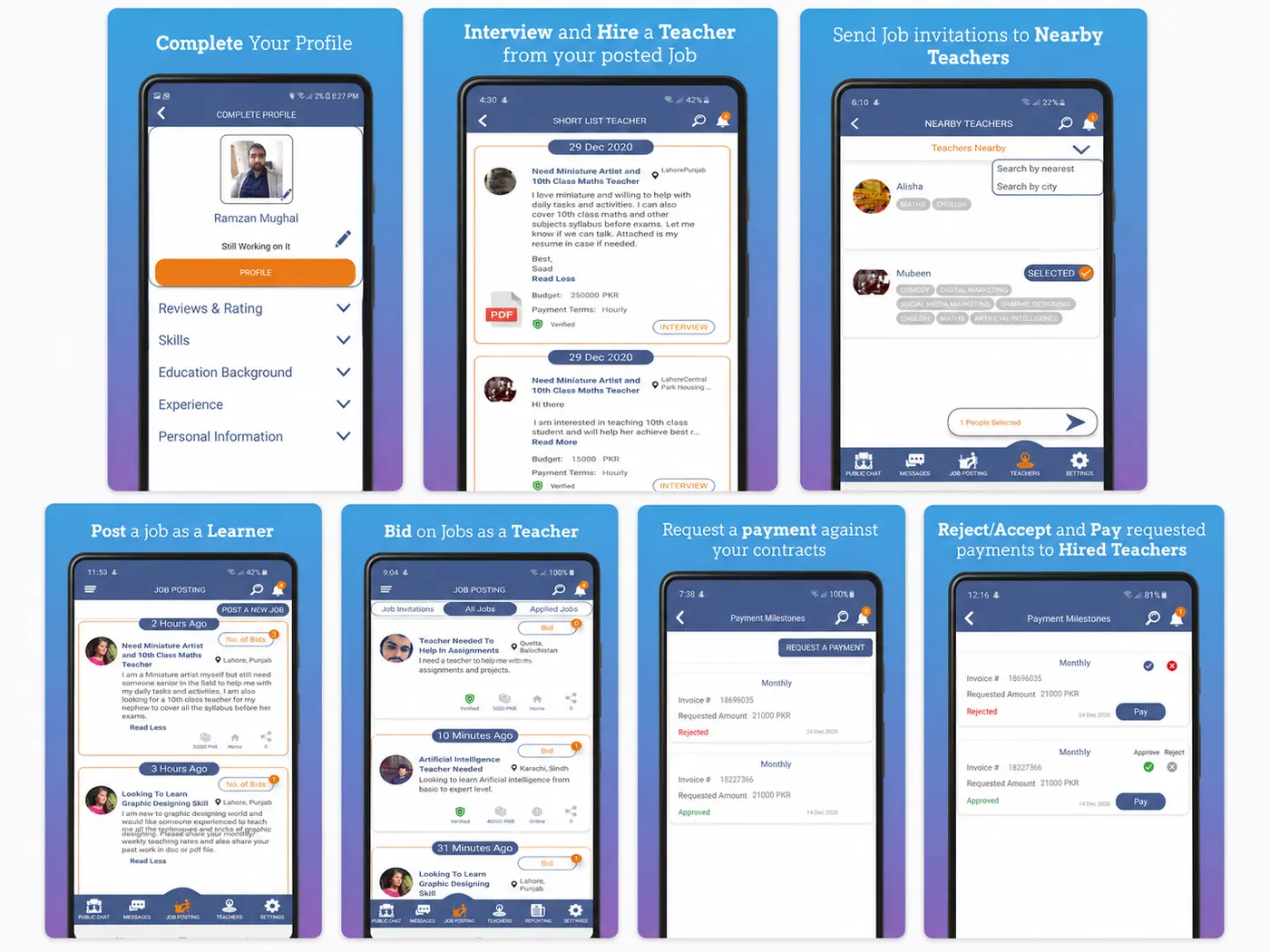
EdTech Marketplace
From informal matching to a two-sided learning marketplace.
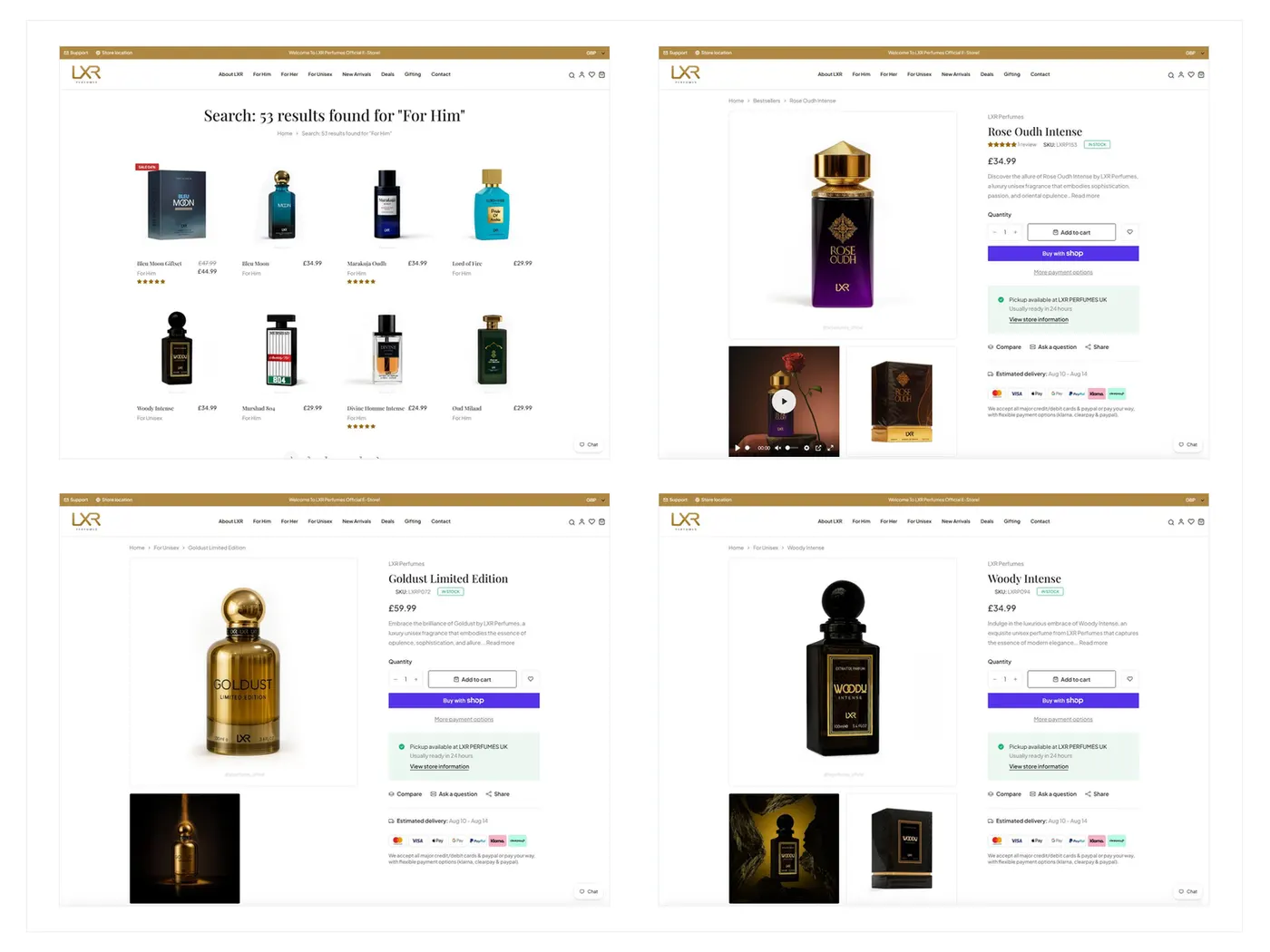
Luxury eCommerce
From one-off product pages to a luxury store that is practical to run.
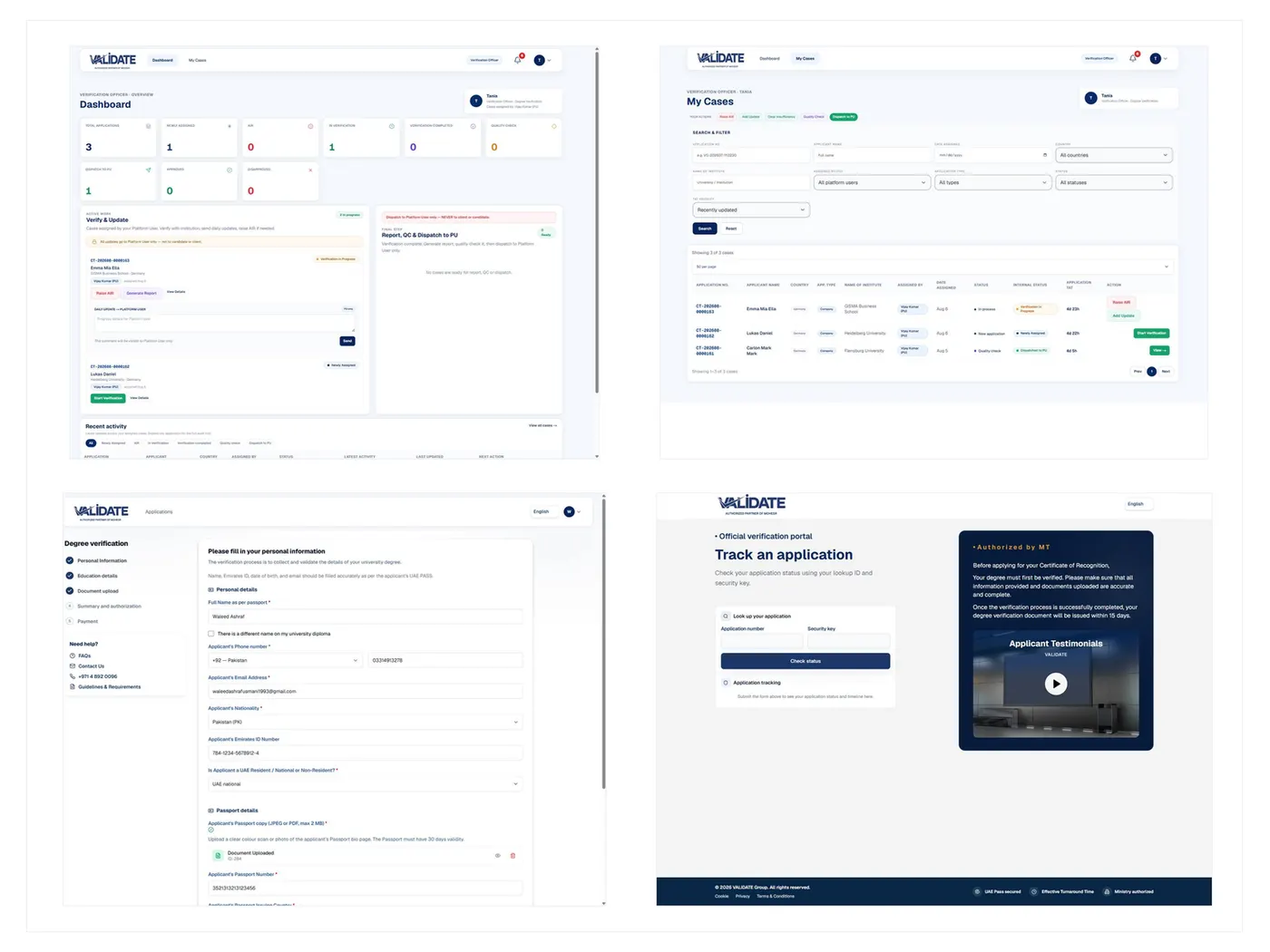
Verification / RegTech
From fragmented verification handoffs to one controlled operating model.
Next step
If this story feels close to the pressure in your product, the useful next step is a conversation about the problem — not another gallery of screens.