
Proven SaaS Performance Scalability Direction (3-Step API Stabilization Plan)
SaaS performance scalability direction case study outlining API latency reduction, database tuning strategy, and scalable API architecture decisions under growth pressure—plus a 3-step stabilization plan.
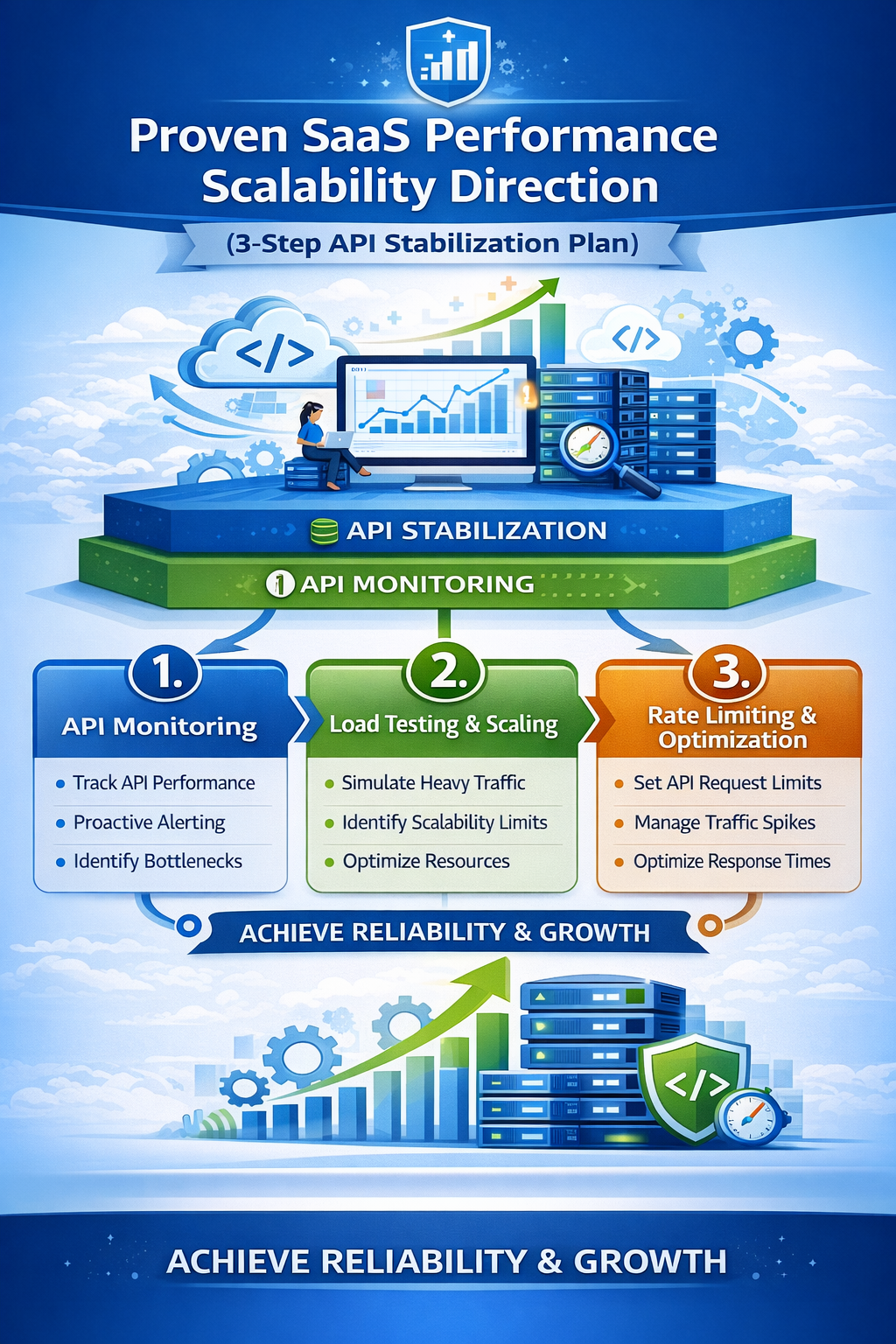
SaaS performance scalability direction was needed when a fast-growing product started facing recurring latency spikes and unstable API response times. Zyvor stabilized critical endpoints, reduced database pressure, and aligned scalable API architecture decisions with growth—without pausing feature delivery.
Note: Specific implementation identifiers are generalized to respect confidentiality. The approach and outcomes reflect real performance and architecture consulting work.
Executive Summary
A rapidly scaling SaaS platform experienced unpredictable p95/p99 latency, slow database queries, and cascading retries during peak traffic. Leadership needed a clear plan: what to fix first, what to optimize next, and which guardrails would keep performance stable as adoption increased.
Zyvor delivered a SaaS performance scalability direction that combined immediate stabilization with a long-term roadmap. Instead of “scale infrastructure first,” the engagement focused on flow-level stability: reduce synchronous work on hot endpoints, remove database hotspots, and improve observability so the team could ship confidently.
Context
As usage increased, the system’s critical request paths became more sensitive to load amplification. A small set of endpoints carried most of the pain: expensive read patterns, missing indexes, large response payloads, and background work running synchronously inside API calls. Delivery momentum remained strong, but performance confidence dropped because bottlenecks were not consistently measured or owned.
The Challenge
- High variance API response times under load; p95/p99 latency exceeded acceptable thresholds.
- Database tuning needed: indexing gaps, hot tables, inefficient joins, and heavy query patterns.
- Synchronous workflows blocking throughput and amplifying timeouts and retries.
- No shared SaaS performance scalability direction across services and teams.
Diagnosis Approach
Zyvor used a pragmatic performance review approach: map request flows end-to-end, identify top latency contributors, and isolate the most expensive database operations. The goal was fast execution—recommendations the team could implement without slowing product delivery.
The analysis focused on query patterns and indexing, payload reduction, safe caching, timeout and retry behavior, and moving non-critical work to asynchronous processing. Findings were translated into a sequenced plan based on impact and effort.
What Zyvor Delivered
- Performance bottleneck mapping across API, database, and critical user journeys.
- Database tuning strategy: index recommendations, query restructuring, and hotspot reduction.
- Caching direction for read-heavy flows to reduce repeated expensive database work.
- Scalable API architecture decisions: async processing guidance and safer endpoint patterns.
- A clear SaaS performance scalability direction roadmap aligned with growth forecasts.
Core Technical Decisions
3-Step API Stabilization Plan
This engagement followed a simple execution sequence. The SaaS performance scalability direction started by stabilizing hot paths, then optimizing primary cost drivers, then adding guardrails and ownership so performance stays predictable as features expand.
1) Stabilize
Reduce peak latency on critical endpoints, fix timeout drivers, and minimize variance under load. Prioritize what users feel first.
2) Optimize
Apply database tuning (indexes, query patterns), streamline payloads, and introduce caching where it improves throughput safely.
3) Guardrail
Add tracing, performance budgets, alerting, and ownership—so regressions are detected early and fixed fast.
Long-Term Scalability Direction
Beyond immediate fixes, Zyvor defined a long-term scalable API architecture direction: clarify ownership of hot paths, reduce coupling where load amplifies failures, and move non-critical workflows to asynchronous processing.
This long-term SaaS performance scalability direction avoided expensive rewrites by making performance measurable: engineering standards, review checklists, and visibility into how changes impact user-facing latency.
Example Metrics to Track
To keep performance stable as the product grows, Zyvor recommended tracking metrics that reflect user experience and system cost:
- p95/p99 latency for top endpoints and key user journeys.
- Error rate segmented by endpoint and dependency (DB/cache/external services).
- Database time contribution per request (slow query count + top query fingerprints).
- Cache hit ratio for read-heavy flows and repeated lookups.
- Retry/timeout frequency to spot cascading failures early.
Outcome
The platform achieved more consistent API performance under growth pressure, reduced peak latency drivers, and gained a practical roadmap toward horizontal scalability. With a clear SaaS performance scalability direction, engineering confidence increased and performance risks became easier to predict and manage.
Frequently Asked Questions
What is “SaaS performance scalability direction” in practice?
It’s a prioritized plan that connects immediate stabilization with scalable API architecture decisions—so teams know what to fix first, what to optimize next, and what guardrails keep results stable.
What do you deliver in a performance review engagement?
Hotspot mapping, database tuning strategy, API recommendations, caching guidance, sequencing by impact/effort, plus guardrails (monitoring, budgets, ownership) teams can maintain.
Do you share confidential implementation details?
No. Case studies intentionally generalize sensitive specifics while preserving the real engagement structure and outcomes.
References & Next Steps
For architecture and performance guidance, review the AWS Well-Architected Framework and Martin Fowler’s architecture resources. Learn more about Zyvor on Services or request a performance review call.
If your product is growing and API performance is becoming unpredictable, Zyvor can provide a focused review and a clear execution plan. The goal is stability now—and scalable architecture decisions that hold up as traffic increases.