
Product Design
Designing Two-Sided Marketplace Workflows for Mobile Products
Two-sided mobile marketplaces need more than matching screens. They need synchronized states for both sides of the relationship.
Waleed Ashraf
Zyvor
5 min read
Product Design
Designing Two-Sided Marketplace Workflow…
Two-sided products work when each side sees a different interface ov…
Two-sided mobile marketplaces need more than matching screens. They need synchronized states for both sides of the relationship.
Students and teachers need different journeys, but jobs, bids, chat, interviews, payment requests, and engagement decisions belong to one lifecycle. The article below is the decision frame behind that pattern: what to notice, what to protect, and how to keep the product coherent as it grows.
1. Start with the right problem
Students and teachers need different journeys, but jobs, bids, chat, interviews, payment requests, and engagement decisions belong to one lifecycle. Teams often feel this first as delivery friction, unclear ownership, or a product that looks finished but is hard to operate.
The useful move is not to start with screens, stack choices, or a rewrite. It is to name the operating problem with enough precision that design, engineering, and commercial teams can share it.
2. Hold one principle, not five products
Model the marketplace states first, then design student and teacher experiences around those states.
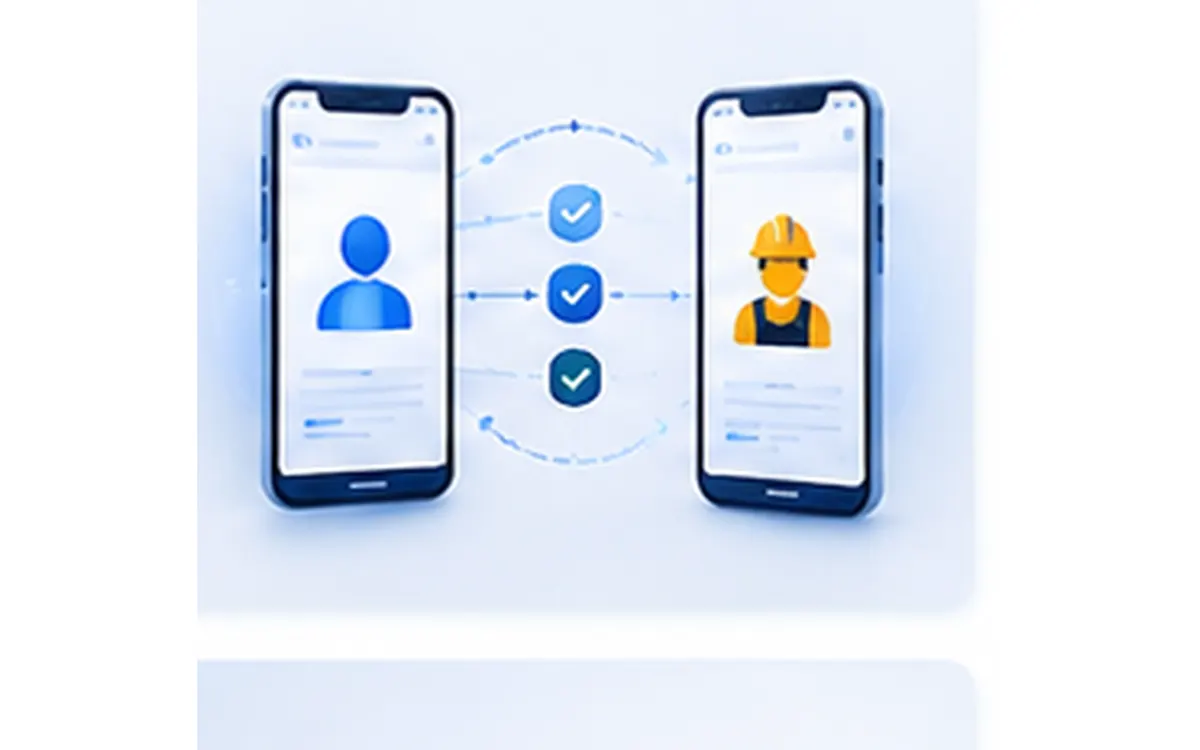
Two-sided products work when each side sees a different interface over the same marketplace truth.
3. Why it matters in practice
Without explicit states, marketplace users lose confidence because the next action is unclear or inconsistent between roles.
When that principle is missing, every new role, channel, or feature creates another local solution. The product still ships. The operating model quietly fragments.
4. How the decision works
The sequence is more important than the tooling. A team can apply the same idea in a marketplace, a multi-portal platform, or a service website if the underlying model stays shared.
- Define each lifecycle stage from job posting to engagement history.
- Give students and teachers separate views of the same state.
- Connect communication, interviews, and payment requests to lifecycle events.
- Keep notification-ready workflows aligned with state changes.
A simple sequence teams can actually use
01
Discover
Define each lifecycle stage from job posting to engagement history.
02
Define
Give students and teachers separate views of the same state.
03
Design
Connect communication, interviews, and payment requests to lifecycle events.
04
Build
Keep notification-ready workflows aligned with state changes.
5. Where this usually fails
Most failures are not dramatic. They look like duplicated workflows, status names that drift, or a mobile experience that cannot carry the same decision the desktop product makes.
- Chat exists separately from job or bid context.
- Payments are introduced without clear engagement state.
- Mobile screens show different versions of the relationship.
- Activity history cannot explain how a decision happened.
6. A practical approach
The recommended path is deliberately small. It is meant to create leverage without turning the article into a delivery plan.
- Start with the state diagram.
- Design role-specific UX around shared lifecycle events.
- Keep communication and payment actions tied to the marketplace object.
- Make every next action explicit.
From this insight
Key takeaways
The points worth carrying into your next product or architecture conversation.
Start with the real user job
Start with the state diagram.
Design for adoption
Design role-specific UX around shared lifecycle events.
Keep the system coherent
Keep communication and payment actions tied to the marketplace object.
Ship with intention
Make every next action explicit.
More insights for product builders
Product Design
Building eCommerce Experiences That Are Easy to Shop and Easy to Operate
Apr 15, 20235 min read
Product Design
Turning Complex B2B Services Into Clear Digital Customer Journeys
Jul 15, 20245 min read

Product Design
Designing Accessible Service Websites Around Clarity and Trust
Sep 15, 20225 min read
Next step
Turn your ideas into impact.
If this way of thinking is already familiar, we can help you turn it into a product people can use.