
42% lower
Deployment rollback rate
Case Studies B2B workflow SaaS
A product team dealing with brittle integrations and unclear service ownership needed a cleaner software architecture model before expanding enterprise accounts.
Digital Product Agency
B2B workflow SaaS
Deployment rollback rate
42% lower
Company context
B2B workflow SaaS
Focus
The engagement focused on software architecture boundaries, ownership cl…
Business pressure
This was a growth-stage B2B SaaS business moving toward more demanding e…
Outcome
42% lower
Case overview
Situation
The business had meaningful traction, but release confidence was falling. Product and engineering teams were spending too much effort navigating unclear service boundaries, operational surprises, and brittle integrations that made delivery slower with every sprint.
Business context
This was a growth-stage B2B SaaS business moving toward more demanding enterprise expectations. Delivery quality and release confidence were no longer internal concerns only; they were becoming customer-facing business risks with commercial impact.
Why the previous approach failed
The existing pattern relied too heavily on team memory, informal ownership, and short-term fixes. That can work at an earlier stage, but once release pressure rises, the lack of clear software architecture boundaries starts slowing delivery and increasing avoidable incidents.
Deployment rollback rate
P95 API latency
Critical incidents
The result was not just better metrics. The team gained a cleaner software architecture model, clearer owner…
Challenges
Service ownership had become difficult to explain across the product and engineering team.
Release confidence was low because integrations and side effects were hard to reason about.
Delivery pressure was increasing as enterprise expectations became stricter.
Approach
Mapped software boundaries, dependency points, and the parts of the system creating release hesitation.
Clarified where ownership needed to change and where architecture decisions were increasing delivery drag.
Defined a stabilization path the team could execute without pausing roadmap progress for a rewrite.
Impact
The result was not just better metrics. The team gained a cleaner software architecture model, clearer ownership, and a more defensible release process that supported growth instead of slowing it down.
The engagement focused on software architecture boundaries, ownership clarity, release risk, and practical stabilization priorities that the team could execute without a major rewrite.
Deployment rollback rate
42% lower
P95 API latency
188ms from 340ms
Critical incidents
6 to 2 per quarter
Who this is relevant for
B2B SaaS teams whose releases feel riskier than they should at their current scale
Founders who know the platform is becoming harder to reason about as the business grows
Engineering teams where software ownership is still partly tribal knowledge
These are the pressure signals that usually mean this kind of architecture and observability work should come before more product expansion.
Signal 1
When release confidence is falling but a full rewrite is neither necessary nor realistic
Signal 2
When the business needs clearer software architecture before larger customers add more delivery pressure
Signal 3
When technical leadership needs a sharper way to connect architecture decisions to execution quality
Continue into the service path that matches this case pressure.
View detailContinue into the service path that matches this case pressure.
View detailContinue into the service path that matches this case pressure.
View detailContinue into the service path that matches this case pressure.
View detailNearby delivery proof for buyers comparing similar product and architecture pressure.
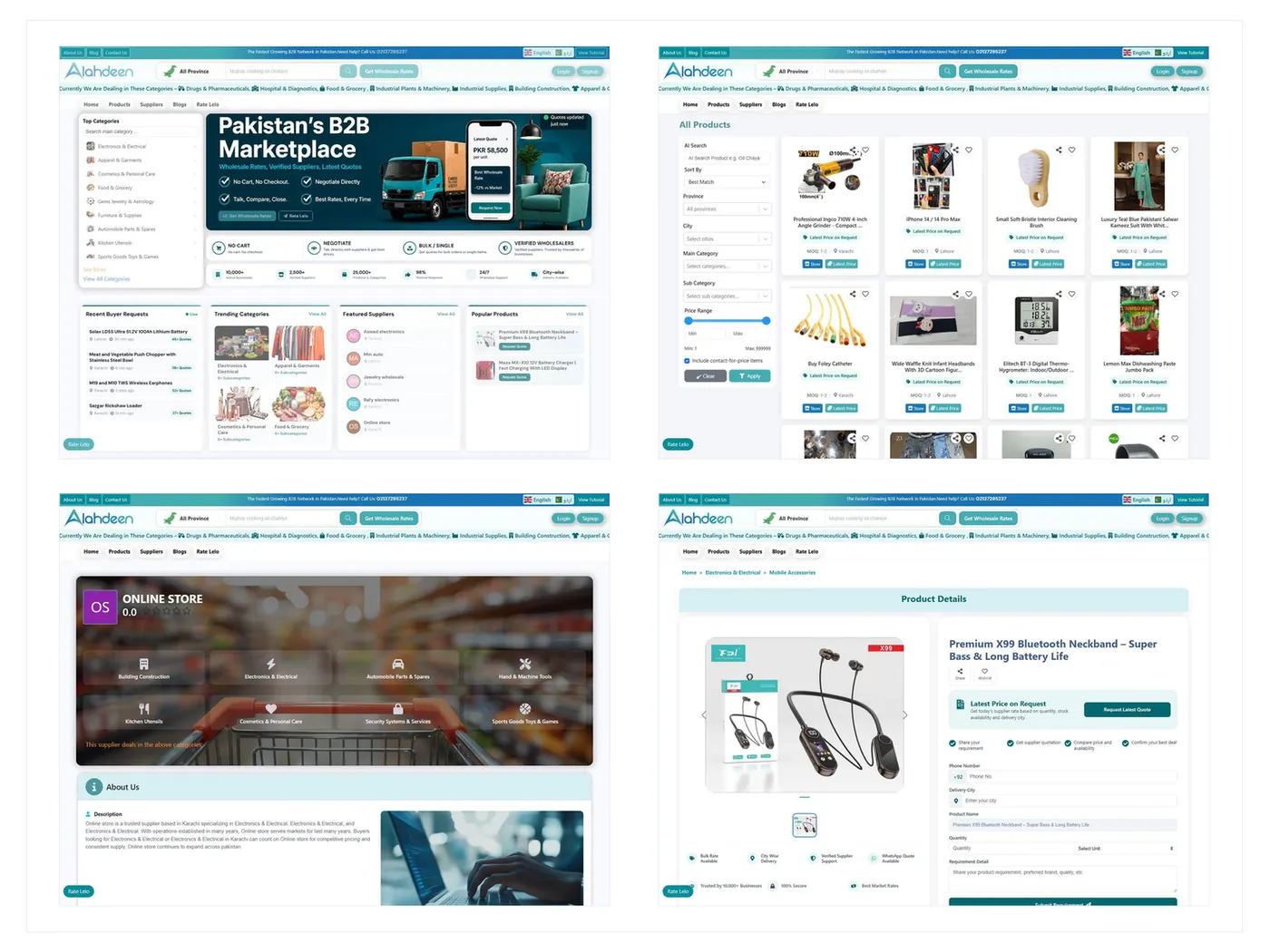
B2B Marketplace
A multi-vendor B2B marketplace connecting wholesale buyers, suppliers, catalogs, storefronts, leads, quotations, and seller operations.
View detail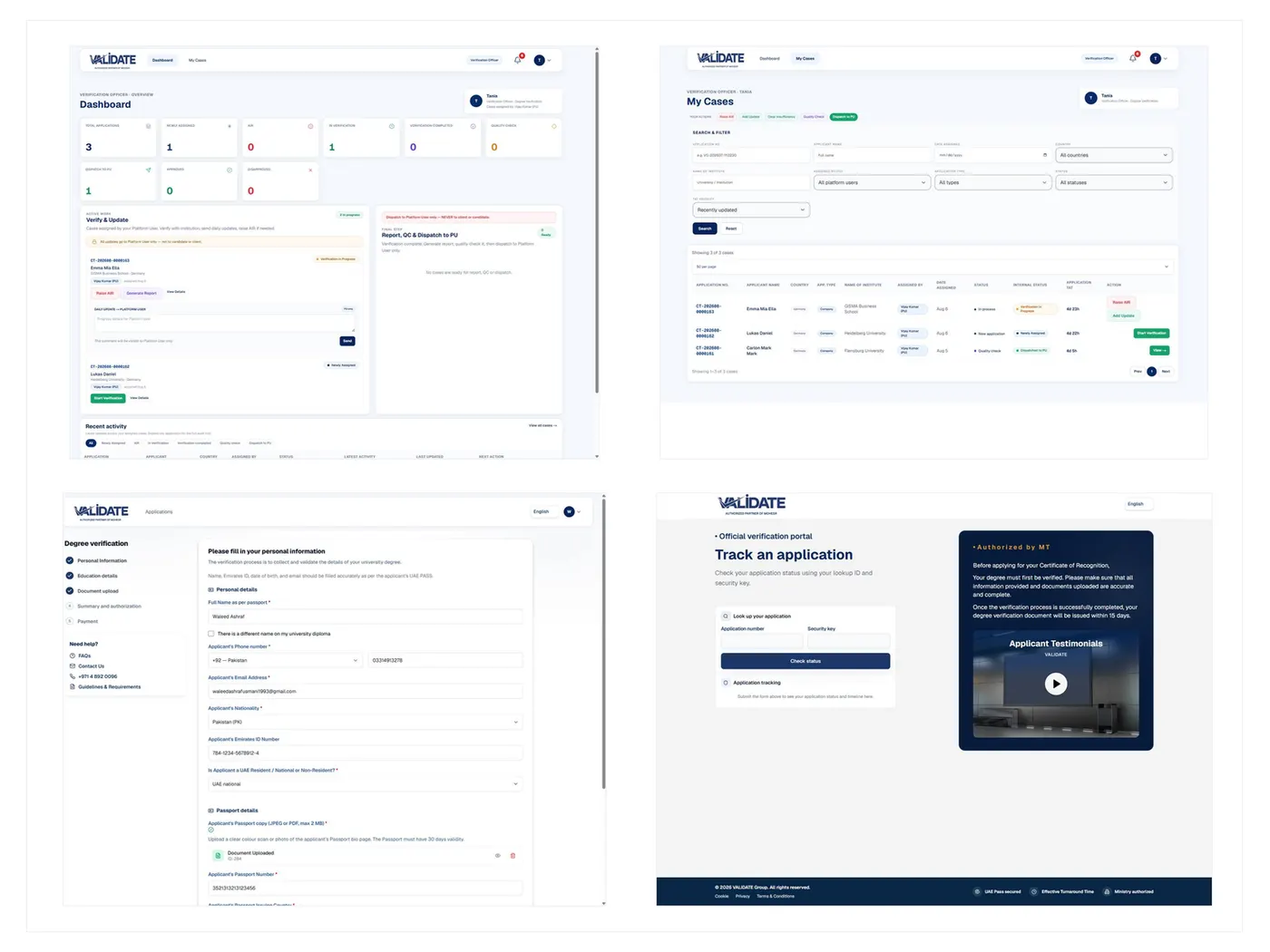
Verification / RegTech
A five-portal verification operations system for applicants, company administrators, processing teams, verification officers, and super administrators.
View detail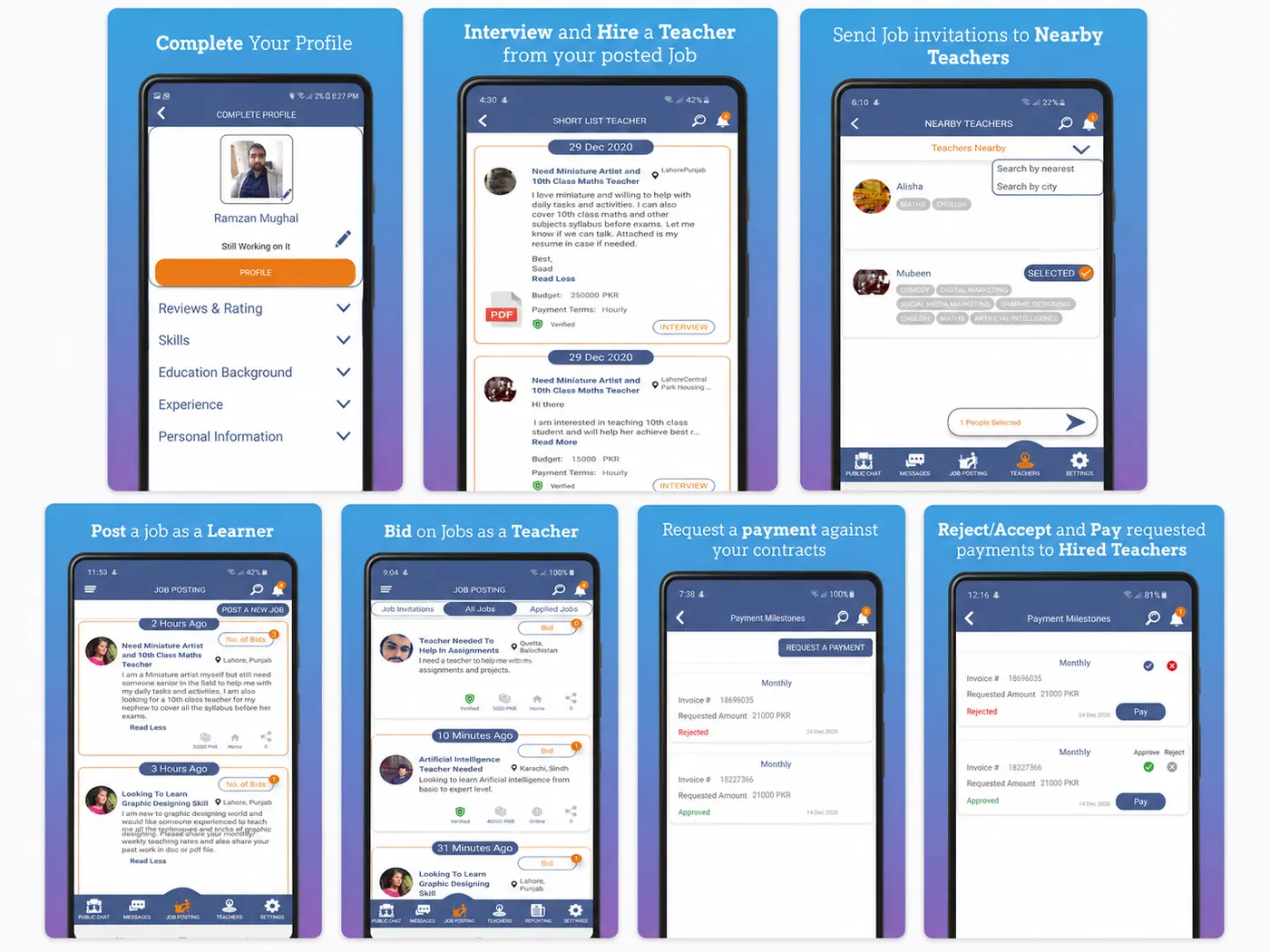
EdTech Marketplace
A two-sided learning marketplace mobile app connecting students and teachers through jobs, bids, profiles, chat, interviews, engagement decisions, and payment requests.
View detailExplore more
This case study turns B2B workflow SaaS into a fuller buyer journey: the software problem, the product pressure, the architecture support behind execution, and the next step for US and UK businesses facing similar growth pressure.
Digital Product Agency model: Strategy, Design, Technology, and Growth.
Product strategy, discovery, MVP roadmap, and go-to-market before expensive builds.
Product design, design systems, web/mobile UX, and conversion-focused interfaces.
Product engineering for SaaS, AI, web, and mobile — architecture as support, not the brand.
Clarify ICP, MVP boundaries, and roadmap so design and engineering build the right product.
View detailValidate B2B workflows and buyer friction before you hard-code assumptions.
View detailDesign SaaS experiences that make complex workflows clear, trustworthy, and usable.
View detailGrow demand with SEO and growth work tied to offers you can actually deliver.
View detailSaaS, AI, web, mobile, backend APIs, and DevOps — inside the same Digital Product Agency model as Strategy, Design, and Growth.
Frontend, backend, APIs, databases, subscriptions, dashboards, integrations, and deployment.
View detailAI-enabled products, automation, LLM workflows, orchestration, and production readiness.
View detailPortals, dashboards, admin tools, workflow platforms, and custom web applications.
View detailiOS and Android delivery connected to shared APIs, auth, notifications, and product data.
View detailSecure APIs, roles, permissions, integrations, queues, webhooks, payments, and data foundations.
View detailCI/CD, cloud ops, monitoring, and production support connected to product delivery.
View detailMove into proof, insights, or a conversation when the challenge is clear enough to discuss.
Compare Strategy, Design, Technology, and Growth paths.
View detailFlagship projects across SaaS, marketplaces, web, and mobile.
View detailHow strategy, design, and engineering connect to outcomes.
View detailPractical guidance for scaling product and engineering teams.
View detailNamed proof around delivery and partnership quality.
View detailBring the product challenge into a direct conversation.
View detailBring the current delivery, reliability, or architecture pressure into a direct conversation. We will help you clarify the next practical sequence.